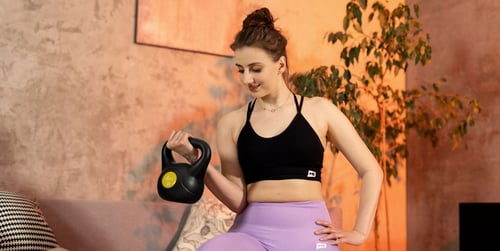
Kettlebells have exploded in popularity over recent years, transforming home workouts and gym routines alike. These versatile weights, with their distinctive handle and cannonball shape, offer a unique way to build strength, endurance, and flexibility. Therefore, if you’re looking to supercharge your fitness, understanding how to use kettlebells correctly is the crucial first step.
Kettlebells for beginners: An introduction to functional training
Their design makes them perfect for ballistic movements (exercises that involve acceleration and deceleration), which builds explosive strength. Unlike fixed machines, kettlebell training is functional, meaning it mimics natural, real-life movements, improving your overall physical preparedness and core strength. They are a single piece of equipment that can replace an entire rack of traditional weights.
Why kettlebells work: The secret to full-body effectiveness
Kettlebells stand out for their ability to deliver a comprehensive full-body workout, seamlessly blending cardio, strength, and flexibility in a single session. Their distinctive handle enables dynamic, flowing movements that elevate heart rate and boost calorie burn, making them highly efficient for improving cardiovascular health and overall fitness in a compact timeframe.
The secret to their effectiveness lies in their offset centre of mass. Unlike traditional dumbbells, the kettlebell’s weight is positioned away from the handle, creating inherent instability. This forces your body to continuously engage stabilising muscles, especially in the core, shoulders, and hips, even during basic exercises like squats or presses.
During ballistic movements such as the kettlebell swing, this instability is amplified, resulting in integrated muscle activation across the entire kinetic chain. This unique feature is what gives kettlebells their superior functional strength and full-body efficiency.
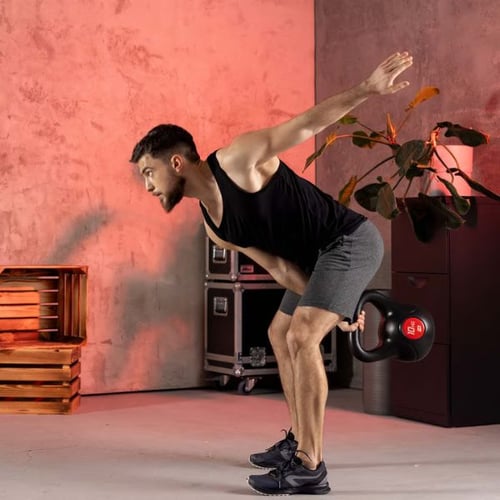
Essential and best kettlebell exercises
The most essential kettlebell exercises for beginners are those that build a strong foundation in functional strength, mobility, and stability. These movements are universally recommended by fitness experts and trainers for their effectiveness and safety when performed using the correct technique.
The beginner phase should focus on six key movements that serve as the foundation for all future training:
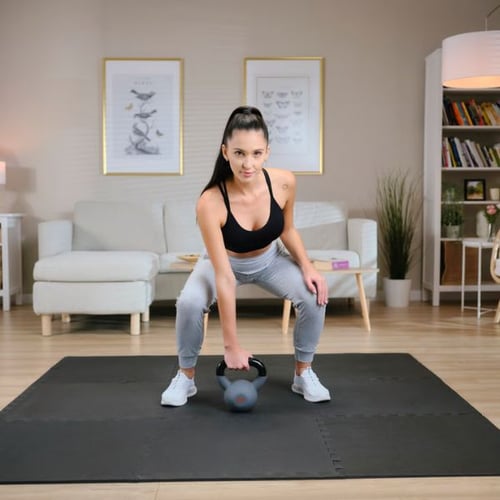
- Kettlebell deadlift: This is the foundational movement. It teaches proper hip hinging and builds fundamental strength across the posterior chain, acting as a safe and controlled introduction to lifting heavier loads.
- Kettlebell swing: This dynamic exercise targets the posterior chain (the glutes, hamstrings, and core), while simultaneously improving cardiovascular fitness. The swing is crucial for building explosive power and grooving the hip hinge.
- Goblet squat: By holding the kettlebell at chest level, this squat variation develops lower body strength, mobility, and core stability. It is an excellent way to establish and groove correct squat mechanics.
- Kettlebell row: Performed unilaterally (one arm at a time), this movement strengthens the back, improves grip, and enhances posture. It is crucial for ensuring balanced upper body development.
- Kettlebell clean and press: This two-part, compound movement develops full-body coordination, upper body strength, and shoulder stability. It is a highly effective exercise for engaging multiple muscle groups at once.
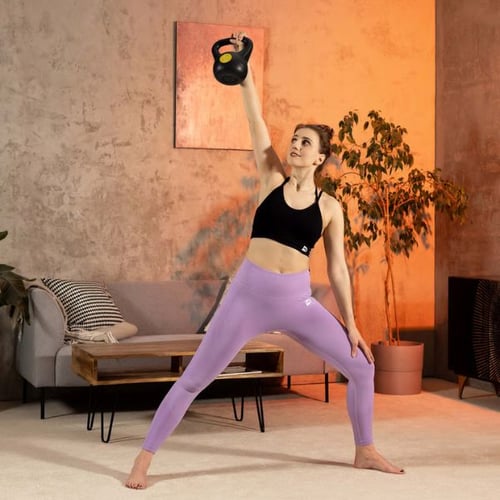
- Turkish get-up (TGU): This complex exercise dramatically enhances core stability, shoulder strength, and overall body coordination. It is superb for building truly functional, integrated movement patterns.
Mastering these fundamental movements allows beginners to progress safely and efficiently. Each exercise targets multiple muscle groups, promotes functional strength, and helps prevent injury by reinforcing proper movement patterns, so starting with them ensures a solid foundation for more advanced kettlebell training.
Getting started with kettlebells
Before diving into your kettlebell journey, it’s essential to equip yourself properly. Knowing exactly what you need will help you make smart choices and set up an effective home training routine from the start.
How many kettlebells do you really need for home training?
One of the great advantages of kettlebells is their minimal space requirement. For most beginners and intermediate lifters, you don't need a huge collection. The number of kettlebells you require largely depends on your fitness level, budget, and the variety of exercises you wish to perform.
For effective training across all muscle groups, a practical set-up for a dedicated home user often includes two weights:
- A single light-to-medium kettlebell: This is for single-arm movements (like the Clean and Press, Snatch, and rows) and for focusing on technique when learning new, more complex exercises.
- A single medium-to-heavy kettlebell: This is primarily for two-handed, hip-drive movements, such as the Swing and the Deadlift, where you can handle significantly more weight.
It is rare to need an entire rack, and often a single, well-chosen kettlebell can provide a fantastic workout for months. Investing in a good-quality, solid-cast iron kettlebell that is comfortable to hold is more important than having a large selection of cheap weights. As you progress, you may choose to purchase a second identical weight for double-kettlebell work (e.g., double front squats) or a heavier weight for deadlifts and swings.
What kettlebell weight should you buy?
Choosing the best kettlebell weight for beginners is arguably the most critical decision. The right weight allows you to perform an exercise with proper form for the intended number of repetitions, while the wrong weight can lead to injury or ineffective training.
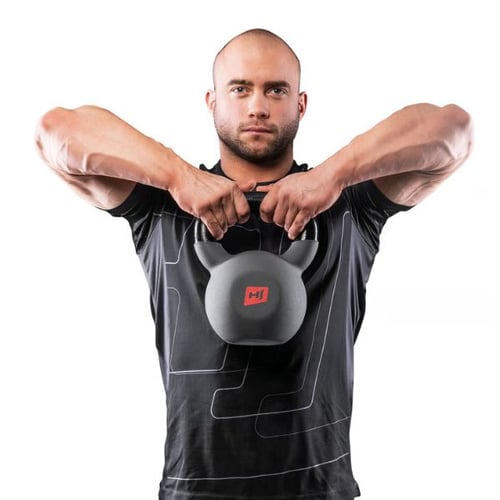
General starting weight recommendations for the most common exercises are:
- For men:
- Swings and deadlifts (two-handed): 12-16 kg, for example Cast iron kettlebell 16 kg;
- Technical / overhead / single-arm work: 8-12 kg
- For women:
- Swings and deadlifts (two-handed): 8-12 kg, for example Vinyl kettlebell 12 kg;
- Technical / overhead / single-arm work: 4-6 kg
These are just starting points to answer the question, what kettlebell weight should you use. Remember that a weight that is suitable for a two-handed swing will be far too heavy for a single-arm press or a Turkish Get-Up, which is why having two different weights is often recommended. If you are unsure, always choose the lighter option for your first purchase. The goal when deciding what kettlebell weight to buy is to find a weight that challenges you while allowing you to maintain perfect form for the duration of a set.
Kettlebell safety: Essential tips to prevent injury and train smarter
Safety is paramount when training with kettlebells. Their unique shape and the dynamic nature of the movements mean that poor form can quickly lead to injury. Always remember that a kettlebell's centre of mass is offset from the handle, requiring greater stability and control.
To ensure your workout is both effective and safe, follow these essential guidelines:
- Always warm up: Spend 5-10 minutes preparing your body with light cardio and dynamic stretches, focusing particularly on your hips, shoulders, and wrists.
- Focus on core engagement: Your abdominal muscles must be braced (tucked in and tight) throughout every movement to protect your spine.
- Grip the handle correctly: For ballistic movements like the swing, the hook grip is common, but ensure your grip is secure at all times. Avoid a death grip - keep your hands relaxed yet firm.
- Perfect the hip-hinge move: Understand that most power comes from your hips, not your back or arms. Practice the hinge movement (pushing your hips back) without the kettlebell until it feels natural.
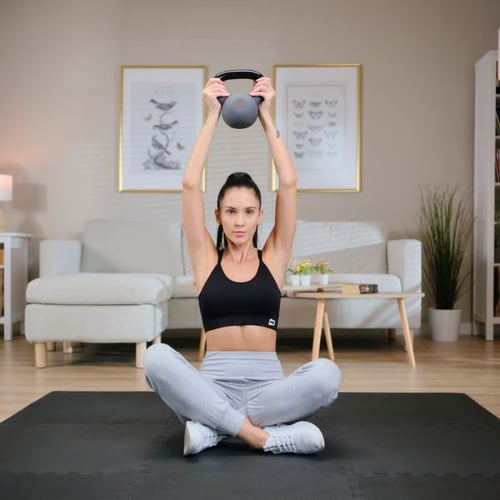
5. Maintain a neutral spine: Throughout every exercise, keep your spine straight from your head down to your tailbone. Avoid rounding your back, especially when lifting the bell off the floor or swinging, to protect your lower back.
6. Start light and master the form: Never rush to a heavier weight. Perfecting the technique with a light kettlebell will prevent injury and make heavier lifting more effective later.
7. Control the weight, don't let it control you: The downward phase of every exercise should be controlled, not a free fall. This ensures your muscles, not your joints, absorb the force.
Before starting any new exercise regime, especially one involving weighted equipment, it is always wise to consult a fitness professional or your doctor.
Progressive overload: When and how to increase kettlebell weight
The process of increasing the resistance you train with is called progressive overload, and it is essential for continued progress. Once you can perform a set of 10-12 repetitions of a particular kettlebell exercise with perfect form and a comfortable level of challenge, it's time to consider moving up. This can also be recognised by:
- Ease of execution: If you can comfortably complete all sets and reps in your workout without feeling adequately challenged by the last few repetitions.
- Speed and power: For ballistic moves like the swing, if the bell starts to feel slow, and you can maintain maximal power easily.
- Improved technique: If you've been focused purely on form for several weeks and can now perform complex moves like the Snatch flawlessly.
However, increasing weight is not the only way to apply progressive overload. You can also make your workouts harder by increasing the number of repetitions (reps) or sets, reducing the rest time between sets, or learning more complex variations of the kettlebell exercises. This allows you to continue challenging your body even without a heavier weight.
Explore more topics:
Author: Hop-Sport Team