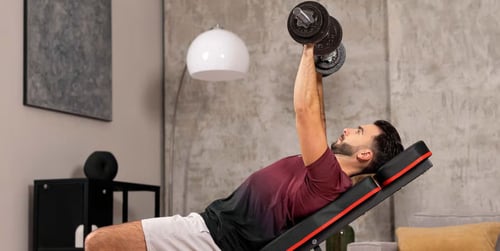
Building a strong, defined chest doesn't require fancy machines or a full gym setup. Dumbbell chest exercises deliver exceptional results with minimal equipment, targeting every angle of your pecs effectively. Whether you're training at home or prefer the versatility dumbbells offer, these movements build serious mass and strength. Ready to transform your chest training? Let's explore the most powerful dumbbell chest workout strategies!
Chest Muscles: What You Need to Know
The chest consists primarily of the pectoralis major, which has two distinct sections:
- Upper chest (clavicular head) - sits near your collarbone
- Lower chest (sternal head) - makes up the larger, lower portion
- Pectoralis minor - lies beneath the major, supports shoulder movement
Understanding how to build chest with dumbbells starts with knowing which exercises target these specific areas for complete development.
The pectoralis minor lies beneath the major, supporting shoulder movement and stability. While smaller, this muscle contributes to overall chest function and appearance. Complete chest exercises with dumbbells engage both major and minor muscles through pressing and fly movements.
Upper chest dumbbell exercises emphasize incline movements, while lower chest dumbbell exercises focus on decline angles. Flat movements target the middle chest comprehensively,
Why Dumbbells Are Great for Chest Training
Dumbbells offer advantages that barbells and machines can't match. Each arm works independently, preventing strength imbalances and forcing weaker sides to catch up. This unilateral training creates more balanced chest development over time.
The extended range of motion with dumbbells activates more muscle fibers than barbell pressing. Your hands can travel deeper at the bottom and closer together at the top, maximizing chest contraction. This increased range builds both size and flexibility.
Key advantages of dumbbell chest training:
- Greater range of motion activates more muscle fibers
- Independent arm movement corrects strength imbalances
- Natural grip positioning reduces shoulder strain
- Versatile angles target upper, middle, and lower chest
- Minimal equipment needed for complete chest development
The 3 Best Dumbbell Chest Exercises
These three movements form the foundation of any effective dumbbell chest workout. Each exercise targets different angles and movement patterns for complete pec development.
Dumbbell Bench Press
The dumbbell bench press stands as the cornerstone chest-building movement. This exercise builds mass across the entire chest while allowing natural arm paths that reduce shoulder stress compared to barbell pressing.
Lie on a flat bench with dumbbells held at chest level, palms facing forward. Press the weights straight up until arms are extended, then lower with control back to starting position. Keep your shoulder blades retracted and feet flat on the floor for stability.
Dumbbell bench press execution tips:
- Start with weights at mid-chest level, elbows at roughly 45-degree angles
- Press explosively while maintaining control throughout the movement
- Bring dumbbells together at the top without clanging them
- Lower slowly over 2-3 seconds to maximize muscle tension
- Keep your core tight and avoid excessive back arch
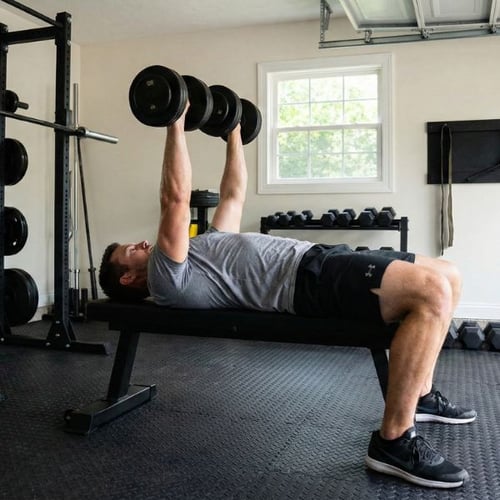
Focus on the stretch at the bottom and squeeze at the top. This full range of motion maximizes muscle fiber recruitment and builds strength throughout the entire movement pattern.
Dumbbell Flyes
Dumbbell flyes isolate the chest through a pure horizontal adduction movement. Unlike presses, flyes minimize tricep involvement, placing maximum tension directly on your pec muscles. This isolation builds chest width and creates definition.
Lie on a flat bench holding dumbbells above your chest with palms facing each other. Lower the weights out to the sides in an arc, maintaining a slight elbow bend throughout. When you feel a deep stretch across your chest, reverse the motion and bring the dumbbells back together.
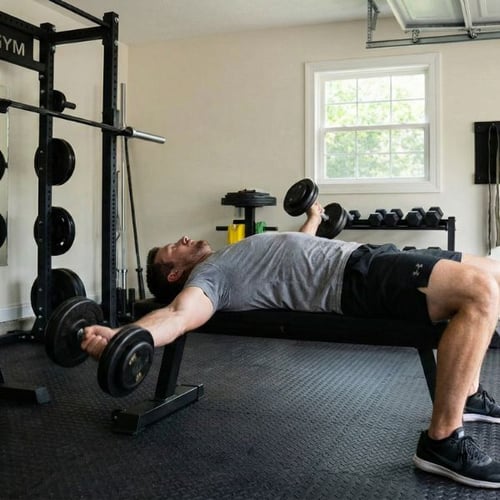
Key points:
- Control matters more than weight
- Use loads allowing smooth, controlled movement
- Feel every inch of the movement
- Focus on stretch and contraction
- Never heave heavy dumbbells
Dumbbell Push-up
Adding dumbbells to push-ups increases range of motion and grip comfort while building functional pressing strength. This variation works excellently for chest exercises with dumbbells when a bench isn't available.
How to perform:
- Place two dumbbells on floor slightly wider than shoulder width
- Grip handles and assume push-up position
- Lower chest between dumbbells
- Go deeper than standard push-ups allow
- Press back up explosively
- Maintain rigid body alignment
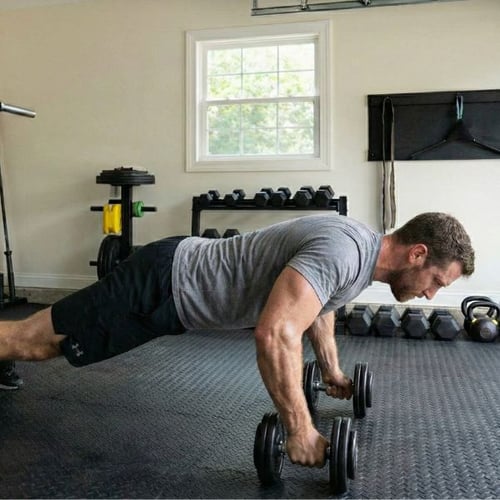
The elevated handles reduce wrist strain while the increased depth stretches your chest more effectively. This makes dumbbell push-ups superior to standard floor push-ups for building chest size. Adjust difficulty by changing hand width or elevating your feet.
How to Structure Your Dumbbell Chest Workout
Organizing your chest training strategically maximizes results and prevents overtraining. Start with compound pressing movements when you're fresh and can handle heavier loads. Follow with isolation exercises like flyes to target specific areas after the main work is complete.
Training frequency:
- 2-3 times per week
- At least 48 hours between sessions
- 3-5 exercises per workout
- 12-16 total working sets
- Progressive overload - gradually increase weight or reps
Sample Chest Workout:
- Dumbbell Bench Press - 4 sets × 8-12 reps
- Incline Dumbbell Press - 3 sets × 10-12 reps
- Dumbbell Flyes - 3 sets × 12-15 reps
- Dumbbell Push-ups - 2 sets × 15-20 reps
Common Mistakes to Avoid
Using too much weight compromises form and increases injury risk. Select loads that allow controlled movement through the full range of motion. If you're bouncing weights at the bottom or using momentum to press, the weight is too heavy.
Neglecting the negative (lowering) phase wastes half the muscle-building stimulus. Lower weights slowly over 2-3 seconds to maximize time under tension. This controlled eccentric phase creates significant muscle damage that drives growth during recovery.
What Are the Benefits of Training Your Chest With Dumbbells?
Training your chest with dumbbells develops balanced strength, reduces injury risk, and builds functional muscle that transfers to real-world movements. The independent arm action forces stabilizer muscles to work harder, creating more complete development.
Benefits of dumbbell chest training:
- Corrects muscle imbalances between left and right sides
- Allows natural movement patterns that protect shoulder joints
- Provides variable resistance throughout full range of motion
- Builds stabilizer strength often missed by machines
We've designed our weight sets to support progressive overload in your chest training. Starting with manageable weights and gradually increasing load creates consistent strength and size gains. Quality dumbbells last for years while delivering results that rival any commercial gym setup.
Build Your Best Chest With Smart Training
Building an impressive chest with dumbbells requires consistency, progressive overload, and proper exercise selection. The three exercises covered target every angle of your pecs for complete development. Train chest 2-3 times per week, focus on controlled form over maximum weight, and gradually increase resistance as strength improves. Whether you're doing upper chest dumbbell exercises on an incline or lower chest dumbbell exercises on a decline, the principles remain constant. We stock everything needed for effective home chest training - from individual dumbbells to complete weight sets. Ready to build serious chest mass? Start with the right equipment and consistent effort!
Explore more topics:
Author: Hop-Sport Team