Setting up a pull-up bar seems simple until you realize height affects everything - from exercise quality to safety and comfort. Too high and you'll need a box to reach it. Too low and your knees drag on the ground. Get the pull up bar height right and transform every workout. Here's exactly how to set up your pull up bars for maximum results!
What Is the Ideal Height for a Pull-Up Bar?
The ideal pull up bar height depends on your body dimensions, training style, and available space. Most people benefit from a bar positioned high enough to hang freely without their feet touching the ground, but low enough to reach comfortably.
For general home training, a bar mounted between 7 and 8 feet from the floor works well for most adults. This range provides enough clearance for full extension while keeping the bar accessible for everyday use.
The General Rule of Thumb
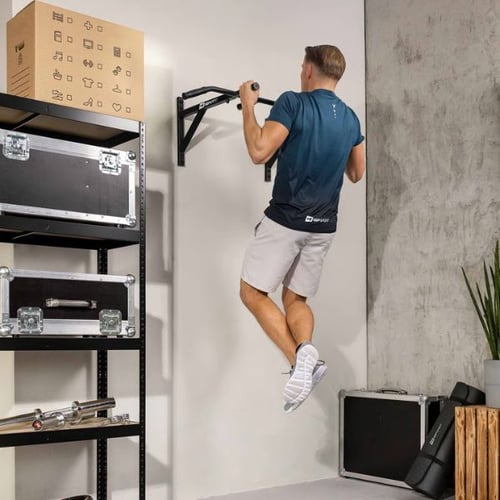
A simple rule for pull up bar set up is to position the bar high enough so your feet don't touch the ground when you hang with straight arms. When you reach up with straight arms, your fingertips should touch or slightly exceed the bar height. This ensures you can grab the bar without excessive jumping.
Most standard setups place the bar around 7 to 7.5 feet high. This works for people between 5'6" and 6'2". If you fall outside this range, adjust accordingly.
Key measurements for proper bar placement:
- Full arm extension: Your feet shouldn't touch the ground when hanging
- Easy reach: You should grab the bar without needing to jump high
- Head clearance: At least 6-12 inches above your head at the top of the pull-up
- Leg clearance: Enough space to bend knees or perform leg raises
Why Your Height Matters
Your body height directly impacts how high the bar should sit. Taller lifters need more clearance to hang fully extended without their feet touching. Shorter lifters might struggle to reach a bar set too high.
Measure your reach by standing flat-footed and extending one arm straight up. Add 2-4 inches to that measurement for a comfortable bar height.
Factors to Consider When Setting Pull-Up Bar Height
Choosing the right height goes beyond just your reach. Several factors influence the best placement, from room dimensions to the types of exercises you plan to do.
Ceiling and Room Clearance
Standard residential ceilings sit around 8 feet, which works for most setups but leaves little room for taller individuals. Measure floor-to-ceiling distance and subtract your height plus extra head clearance. Always leave at least 6 inches between your head and ceiling at the peak of a pull-up. If your ceiling is low, mount the bar slightly lower and bend your knees during exercises.
Exercise Variations (Strict, Kipping, Muscle-Ups)
Different exercises require different amounts of space. Strict pull-ups need minimal clearance, since your body stays relatively controlled. Kipping pull-ups involve swinging, which requires more room both above and below the bar. Muscle-ups demand even more space as you transition from hanging to pressing above the bar.
Clearance needs for different movements:
- Strict pull-ups: Standard hanging space, minimal swing
- Kipping pull-ups: Extra room for forward and backward body swing
- Muscle-ups: High clearance for pressing movement above the bar
- Leg raises and knees-to-elbows: Space below for full leg extension
- L-sits: Room to hold legs horizontal without touching the ground
If you plan to do dynamic movements, add extra height to avoid hitting your head or losing control mid-rep. At Hop-Sport, our pull up and dip stations are built to accommodate various training styles with adjustable and spacious designs.
Safety and Stability
Proper bar height reduces injury risk. Too low, and you might hit surrounding objects; too high and jumping to reach increases the chance of slipping. The bar must be securely fastened to support your body weight plus dynamic forces from swinging or kipping. Always follow manufacturer instructions and use appropriate mounting hardware for your wall or ceiling type.
Different Types of Pull-Up Bars and Their Height Needs
Not all pull-up bars mount the same way, and each type comes with specific height considerations. Understanding the differences helps you choose the right bar for your space and install it correctly.
Wall-Mounted Bars
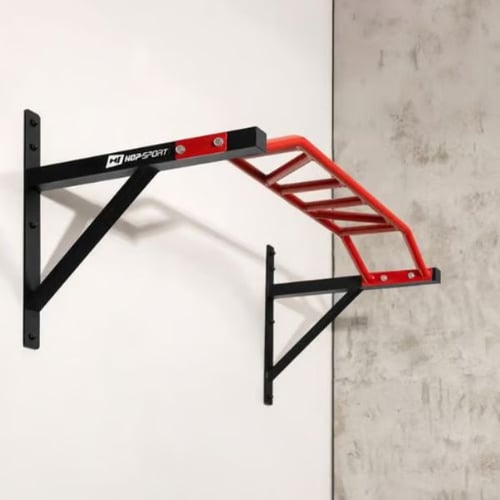
Wall-mounted bars (for example: Grid-Style Pull-Up Bar HS-2002K) attach directly to a solid wall, usually with heavy-duty bolts drilled into studs. These bars offer excellent stability and can be positioned at any height you choose, making them the most flexible option for customizing pull up bar height.
When installing a wall-mounted bar, ensure it's placed high enough for full arm extension but low enough to reach comfortably. Consider the distance the bar extends from the wall - typically 18 to 36 inches - and make sure you have enough room to perform pull-ups without hitting the wall.
Doorway Bars
Doorway bars (for example: Durable adjustable doorway pull-up bar HS-M070DP) into standard door frames and rely on tension or leverage to stay in place. They're the most convenient option for home use since they require no drilling or permanent installation. However, their height is fixed by your door frame.
Most doorway frames sit around 6.5 to 7 feet high, which works for shorter individuals but may be too low for taller lifters. If you're over 6 feet tall, you'll likely need to bend your knees during pull-ups. Doorway bars also limit exercise variety - you can't do kipping pull-ups or muscle-ups safely due to the confined space.
Pros and cons of doorway vs wall-mounted bars:
- Doorway bars: Easy to install, no drilling, limited height adjustment, less stable for dynamic movements
- Wall-mounted bars: Fully customizable height, more stable, requires drilling and permanent installation, better for advanced training
- Doorway bars: Ideal for flats or renters who can't modify walls
- Wall-mounted bars: Best for dedicated home gyms with proper wall support
Freestanding Rigs and Towers
Freestanding rigs (Pull Up and Dip Stations) and towers are standalone structures that don't require wall or ceiling mounting. They typically include multiple pull-up bar heights, dip bars, and sometimes additional attachments for various exercises.
The height of the pull-up bar on freestanding rigs is usually set by the manufacturer, though some models allow adjustments. Most freestanding stations place the bar between 7 and 8 feet high. The advantage here is stability without permanent installation - you can move the rig around your space as needed.
Common Mistakes to Avoid
Even with good intentions, people often make errors when setting up pull-up bars. Avoiding these common mistakes saves time and prevents injury.
Installing the Bar Too High or Too Low
A bar mounted too high forces you to jump each time, risking missed grips. Too low and your feet touch the ground, limiting range of motion. Test before permanent installation - when hanging with straight arms, your feet should clear the ground by several inches.
Ignoring Clearance for Head and Legs
Check space above and below. Your head rises above the bar during pull-ups, so ensure adequate ceiling clearance. Below, verify enough room for leg movements without obstruction from floor or equipment.
Poor Mounting or Weak Support
The bar is only as safe as its installation. Installation safety checklist:
- Always mount into wall studs or solid ceiling joists, never just drywall
- Use heavy-duty bolts rated for your body weight plus safety margin
- Check that all connections are tight before first use
- Inspect the bar regularly for wear or loosening.
How High Should a Pull Up Bar Be?
Start by measuring your standing reach and adding 2-4 inches. Then adjust based on your ceiling height, planned exercises, and mounting type. For most people, 7 to 8 feet works well, though taller individuals may need 8.5 feet or higher. Always test your setup before permanent installation. Browse our range to find the perfect bar for your space and training goals!
Explore more topics:
Author: Hop-Sport Team