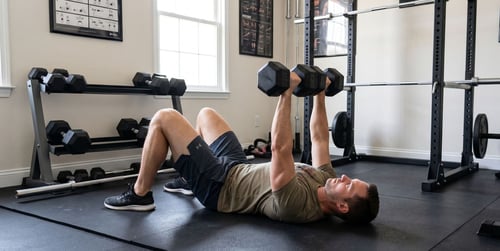
No bench? No problem. The floor press is one of those exercises that looks simple but delivers serious results - and it works just as well at home as it does in a gym. If you're building a home setup, our weight sets are a great place to start. In this guide, you'll find everything you need: proper form, muscles worked, benefits, and the most common mistakes to avoid. Let's get into it!
What Is the Floor Press Exercise?
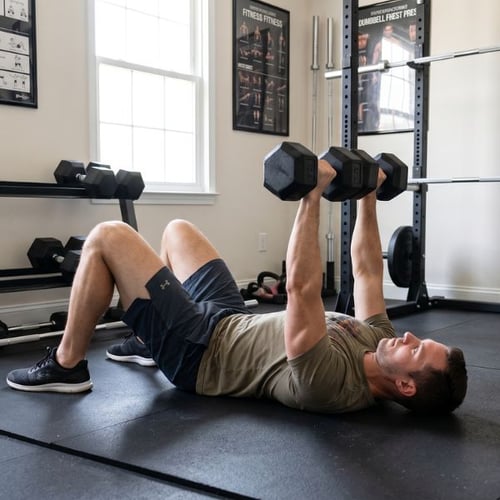
The floor press is a pressing movement performed lying flat on the floor instead of a bench. You press a barbell, dumbbell, or kettlebell straight up from chest height, with your upper arms resting on the ground at the bottom of each rep. It's been around for decades - long before the bench press became the standard - and it's making a well-deserved comeback in home and strength training circles.
What makes it different from a standard bench press is the limited range of motion. Because the floor stops your elbows from dropping below a certain point, the stretch on the chest is reduced and the triceps take on more of the work. That's not a weakness - it's actually what makes the floor press useful as a targeted strength builder.
Benefits of the Floor Press
The floor press isn't just a bench press substitute - it brings its own set of advantages that make it worth including in a routine even if you do have access to a bench.
Here's why it's worth adding to your training:
- Builds serious triceps strength due to the shortened range of motion
- Easier on the shoulder joints compared to full-range pressing movements
- Great for breaking through sticking points in your bench press or overhead press
- No bench required - all you need is a floor and a pair of weights
- Works well with dumbbells, barbells, and kettlebells
At Hop-Sport, we always point beginners toward exercises that don't need a lot of equipment to do well - and the floor press is a perfect example of that approach in action.
Muscles Worked in the Floor Press
The floor press is a compound upper body movement, which means it hits several muscle groups at once. Understanding what's working helps you programme it more effectively.
Primary muscles worked:
- Triceps - take on the majority of the load, especially in the top half of the press
- Pectorals (chest) - engaged through the push, though less so than in a full bench press
- Anterior deltoids (front shoulders) - assist throughout the pressing movement
What Makes the Floor Press Different Muscularly
The key difference compared to a bench press is the triceps involvement. Because the range of motion is cut short, the chest doesn't get the same deep stretch it would on a bench. This shifts more emphasis to the triceps and the lockout portion of the press - which is exactly where many people are weakest. If your bench press stalls at the top, the floor press can directly address that weak point.
How to Do the Floor Press Correctly
Good form here is straightforward, but a few details make a big difference to how effective and safe the movement is.
Step-by-step guide to the dumbbell floor press:
- Lie flat on your back with knees bent, feet flat on the floor
- Hold a dumbbell in each hand, elbows resting on the ground at roughly 45 degrees from your torso
- Press the dumbbells up until your arms are fully extended
- Lower slowly until your upper arms touch the floor - don't let them crash down
- Pause briefly, then press again
Tips for Better Form
Keep your core engaged throughout - don't let your lower back arch off the floor. The pause at the bottom is important: it removes the elastic energy from the movement and forces your muscles to do all the work from a dead stop. That's what makes the floor press more demanding than it looks, and also why it's so effective for building raw pressing strength.
Dumbbell vs Barbell Floor Press
Both versions of the floor press are effective, but they suit different situations. The dumbbell floor press is more accessible - you can do it at home with minimal equipment, and it allows each arm to move independently. A pair of dumbbells is all you need to get started.
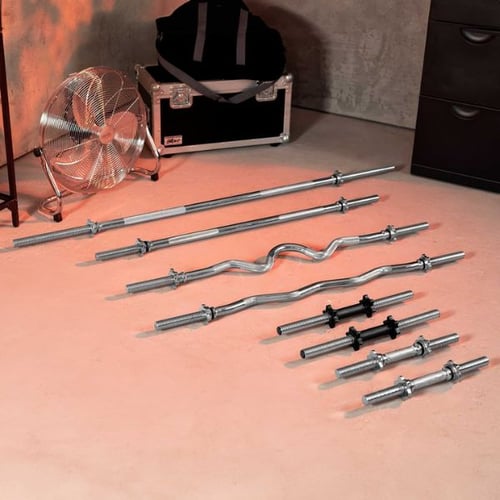
The barbell floor press allows you to load heavier and is better suited for pure strength work. It requires a bit more setup, especially if you're working without a rack. When it comes to floor press vs bench press, the floor version wins on accessibility and joint friendliness, while the bench press edges ahead for overall chest development.
If you're building a more complete home gym, adding a barbell to your setup opens up a lot more options beyond just the floor press.
For most home gym users, the dumbbell version is the obvious starting point. It's safer to set up solo and still delivers excellent results across both chest and triceps. If you're ready to take your training further, a weight bench opens up a lot more pressing options beyond the floor.
How Often Should You Do the Floor Press?
For most people, one to two times per week is enough to see consistent progress with the floor press. If you're using it as a main pressing movement, treat it like you would a bench press - give it a dedicated slot in your session and don't pair it with heavy overhead pressing on the same day. If it's supplementary work alongside other chest or triceps exercises, once a week is plenty.
Pairing It With Other Exercises
The triceps take a lot of the load in the floor press, and they also get hit during push-ups, dips, and any overhead pressing you do. Keep that in mind when planning your week - too many triceps-heavy movements back to back will slow your progress rather than speed it up.
Floor Press Variations Worth Trying
Once the standard floor press feels comfortable, it's worth exploring a few variations. The single-arm dumbbell floor press forces your core to resist rotation, which adds a stability element to a straightforward pressing movement. It also highlights any strength imbalances between sides quickly.
The kettlebell floor press changes the feel of the movement and increases demand on grip and wrist stability. If you want to shift even more focus onto the triceps, a close-grip floor press - hands closer together on the bar or dumbbells - does exactly that.
Common Floor Press Mistakes to Avoid
Once the standard floor press feels comfortable, it's worth exploring a few variations that shift the focus or add variety to your sessions.
The single-arm dumbbell floor press is a great option - pressing one arm at a time forces your core to work harder to resist rotation, which adds an element of stability training to a straightforward pressing movement. It also highlights any strength imbalances between sides quickly.
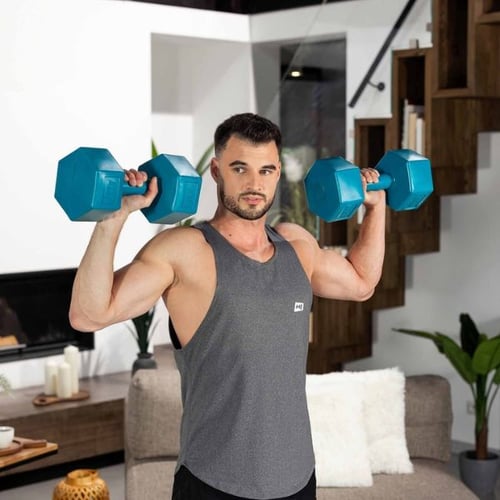
The kettlebell floor press is another solid choice. The offset weight of a kettlebell changes the feel of the movement and increases demand on grip and wrist stability throughout the press. If you want to shift even more focus onto the triceps, a close-grip floor press - hands closer together on the bar or dumbbells - does exactly that. It's a small adjustment that noticeably changes which muscles take the lead.
Floor Press FAQs
Is the Floor Press Good for Beginners?
Yes, the floor press is a great option for beginners because it limits the range of motion, reduces shoulder strain, and doesn't require a bench - making it one of the more accessible pressing exercises to learn at home.
Can You Do Floor Press at Home With Dumbbells?
Absolutely - the dumbbell floor press is one of the best home exercises you can do, requiring nothing more than a pair of dumbbells and enough floor space to lie down comfortably.
Should You Replace the Bench Press With the Floor Press?
The floor press works well alongside the bench press rather than replacing it - both movements complement each other, with the floor press targeting triceps and lockout strength while the bench press develops more overall chest volume.
Explore more topics:
Author: Hop-Sport Team