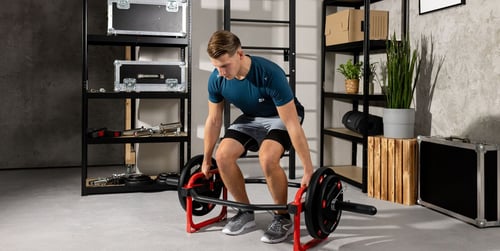
The trap bar deadlift stands out as a versatile compound exercise that builds full-body strength while minimising stress on the lower back compared to traditional deadlifts with Olympic barbells. Using a hexagonal trap bar, this movement allows a more natural hand position and upright torso, making it accessible for beginners and athletes alike. It effectively targets multiple muscle groups, enhancing power, posture, and overall performance.
What is a trap bar deadlift?
The trap bar deadlift employs a specialised hexagonal barbell, commonly referred to as a hex bar or trap bar, designed with neutral-grip handles positioned at the lifter's sides. You position yourself centrally within the hexagon, which aligns the load directly over your centre of gravity for optimal biomechanical efficiency.
Trap bar deadlift: Muscles worked
The trap bar deadlift engages a wide array of muscle groups as a compound exercise, with primary emphasis on the lower body and posterior chain.
- Quadriceps: These drive knee extension during the initial lift phase, receiving greater activation due to the upright torso position compared to conventional deadlifts.
- Glutes: The gluteus maximus powers hip extension at the top of the movement, promoting strength and hypertrophy in this key area.
- Hamstrings: They assist in hip extension and knee flexion for stabilisation, though with slightly less emphasis than in straight-bar variations.
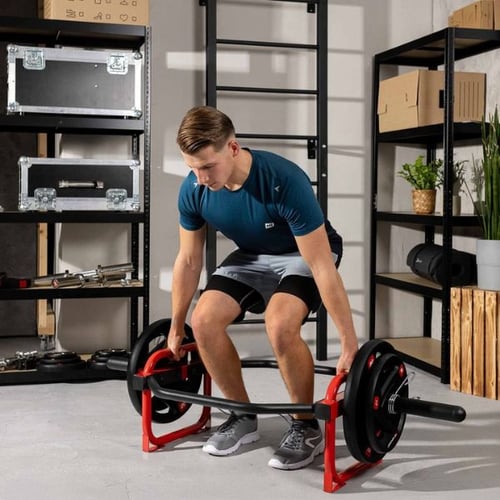
Secondary muscles, including the erector spinae for spinal stability, trapezius for shoulder support, core for torso rigidity, and forearms for grip, complete the full-body demand.
Trap bar deadlift vs conventional: What are the differences
The trap bar deadlift offers distinct advantages over traditional deadlifts, enhancing safety, performance, and versatility for diverse training needs.
- Reduced spinal stress: The centred load and neutral grip allow a more upright posture, minimising shear forces on the lower back while shifting focus to the legs.
- Increased load capacity: Lifters often handle 5-10% more weight thanks to improved balance and biomechanics, accelerating overall strength gains.
- Superior quad and glute development: Greater knee flexion boosts quadriceps engagement, while optimal hip positioning maximises glute activation for power and aesthetics.
This exercise proves ideal for athletes, beginners, and those prioritising joint health alongside progressive overload.
Perfect deadlift with trap bar form step-by-step
Mastering trap bar deadlift form requires precise setup and execution to maximise strength gains while safeguarding joints. Follow these structured steps for optimal performance and safety.
Setup: Grip, stance and bar position
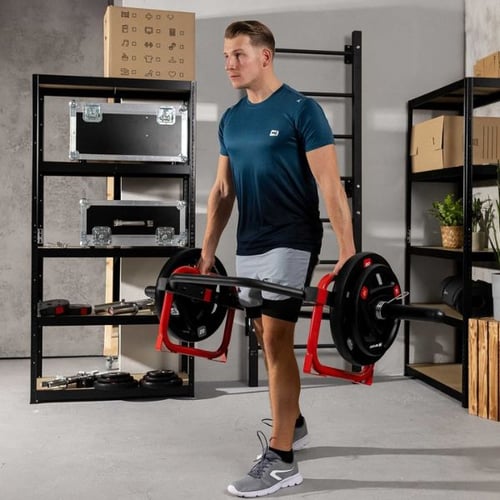
Position your feet hip-width apart inside theOlympic Steel Deadlift Bar, with toes pointing slightly outward for stability, and shins aligned with or just ahead of the bar's centre.
Grip the neutral handles just outside your legs using a double-overhand or mixed grip, maintaining a tight hold while bracing your core and keeping your chest up with a neutral spine. Load the bar evenly and position it directly under your midfoot to ensure a vertical bar path throughout the lift.
Execution: The lift and lockout phase
Initiate the lift by driving through your heels, extending your knees and hips simultaneously, while keeping the bar close to your body and your torso upright. As the bar passes your knees, thrust your hips forward powerfully to reach full extension, squeezing your glutes at the top without hyperextending your lower back. Control the descent by reversing the motion. Hinge at the hips first, then bend your knees to return the bar to the floor under tension.
Common form mistakes to avoid in the hex bar deadlift
There are many benefits of the trap bar deadlift, but frequent form errors can undermine its safety and effectiveness. Recognising and correcting these mistakes allows you to lift heavier loads confidently while protecting your joints.
- Loose grip on the handles: Failing to grip firmly prevents full-body tension, leading to instability and reduced power transfer from your legs to the bar. Squeeze the handles difficult to engage your forearms, lats, and core right from the start.
- Incorrect bar path: Standing too far from the bar or letting it drift forward shifts excessive load onto your lower back, negating the hex bar's neutral path advantage. Keep your feet centred under the handles and drive the bar straight up vertically.
- Excessive squat depth: Dropping your hips too low turns the lift into a squat, causing your hips to rise prematurely and compromising posterior chain activation. Position your hips at a height where your shoulders align over the handles for optimal hip hinge mechanics.
- Knee lockout at the start: Straightening your knees fully places undue stress on your back and disrupts the leg drive. Maintain a slight knee bend with shins under the handles to initiate powerful extension through your quads and glutes.
- Back rounding or head jutting: Losing spinal neutrality by rounding your back or looking up early invites injury and weakens your bracing. Keep your chest proud, core braced, and gaze neutral to maintain tension throughout.
Mastering these corrections elevates your hex bar deadlift performance, fostering progressive overload and long-term progress in your strength training routine.
How to choose the right weight of trap bar for deadlift
Selecting the correct load is crucial for developing strength, hypertrophy, and proper form in the trap bar deadlift. Beginners often underestimate the importance of progressive overload, but the key is to gradually increase the weight as strength and technique improve.
Finding your starting weight
Start with a manageable load that allows 8-10 controlled repetitions with perfect form. For most individuals, this equates to about 50-60% of your estimated one-repetition maximum (1RM). Focus on mastering technique, particularly the hip hinge, bracing, and lockout before increasing intensity.
Once you can complete all repetitions with stability and no form breakdown, add small increments, ideally 2.5-5 kg per side, to maintain steady and safe progress.
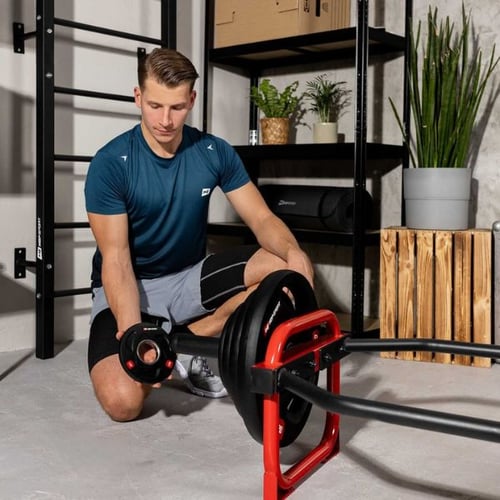
Progressive overload for continued gains
To keep improving strength and muscle growth, apply the principle of progressive overload in one of the following ways:
- Increase the load gradually every week or two, depending on recovery and performance.
- Add volume by including one additional set or a few extra reps per session.
- Enhance control by slightly lowering the bar slower during the eccentric phase to increase time under tension.
- Vary ranges - use high handles for heavier loads and low handles for more depth and quad involvement.
For optimal results, track your training in a logbook and aim for consistent, incremental improvements rather than large jumps in weight. This approach enhances strength safely while avoiding plateau or injury.
FAQ around trap bar deadlift
Trap bar deadlifts spark numerous questions because this relatively underutilised variation remains less common than conventional deadlifts in most gyms, despite its superior safety and versatility for general lifters and athletes alike. This FAQ tackles the key uncertainties around technique, comparisons, and more to help you harness its full potential confidently.
Trap bar vs barbell deadlift: What is safer?
The trap bar deadlift proves safer for most individuals because it centres the load directly over your centre of gravity, which promotes a more upright torso position. It significantly reduces shear forces on the lower back compared to the conventional deadlift's forward bar path.
Can I lift more weight with a trap bar deadlift?
Most lifters manage 5-20% heavier loads due to superior balance, neutral grips, and biomechanical efficiency, enabling safer progressive overload.
How often should I perform trap bar deadlifts?
Incorporate trap bar deadlifts into your routine 1-2 times per week within a balanced programme, ensuring 48-72 hours of recovery between sessions to facilitate adaptation and prevent overtraining.
What's the difference between trap bar and hex bar deadlifts?
Trap bar deadlifts and hex bar deadlifts refer to the identical exercise performed with a hexagonal barbell, where "trap bar" commonly highlights its benefits for trapezius engagement and overall stability.
Should I use high handles or low handles on the trap bar?
Opt for low handles if you possess sufficient mobility, as they provide a fuller range of motion and greater quadriceps emphasis; conversely, select high handles for beginners, taller lifters, or those with back limitations to simplify the starting position and minimise stress.
Are trap bar deadlifts good for powerlifting?
Trap bar deadlifts excel as accessory exercises in powerlifting programmes, where they build explosive power and work capacity effectively, although conventional deadlifts remain the primary choice for competition maximums.
Author: Hop-Sport Team