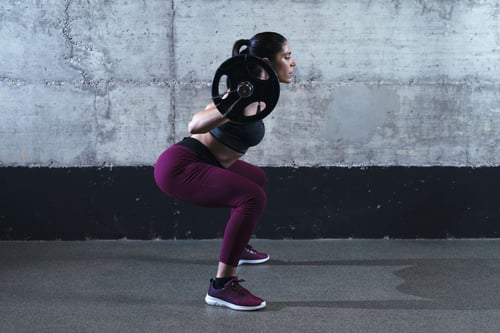
What is a barbell? At first glance it is simply a long steel bar you load with plates at both ends – until you stand in front of a shelf holding eight models and discover that each one means something different. A 6 kg home bar and a 20 kg competition bar share the same name and almost nothing else: they differ in length, empty weight and sleeve diameter, and that last figure decides which plates will ever fit. We go through it step by step: what the bar is made of, how much it weighs, how long it is, which shape suits which exercise – and how to put those in the right order before you buy.
What separates one bar from another:
- Bar and plates – the bar is the tool, the plates and collars are the load you add
- Sleeve diameter – 25 mm or 50 mm decides which plates will ever fit
- Empty weight – from around 6 kg for short home bars up to 20 kg in competition
- Length – a 120 cm bar fits easily in a spare room, a 220 cm bar does not
- Shape – straight, EZ curl, short and hex bars each change the job the bar does
What Is a Barbell and How Is It Used in Strength Training?
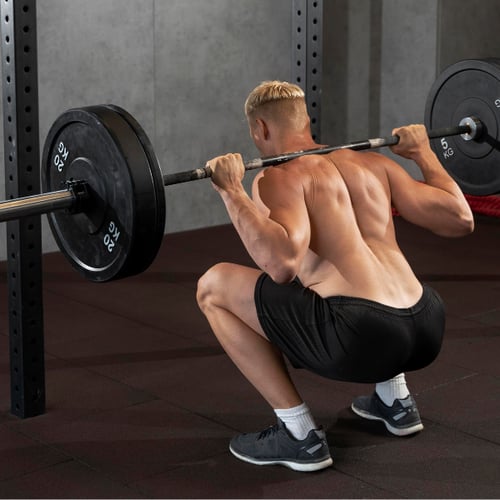
Strip a loaded bar back to its parts and you get a shaft you grip, two sleeves holding the plates and collars stopping them from sliding. In formal terms, “what are barbells” covers the bar, plates and collars together; in a shop, the word means the bar alone. Squats, presses, rows and deadlifts all run through that one piece of steel, which is why a weightlifting bar is usually one of the first purchases for a home gym.
Where the bar does the work:
- Lower body – back squats, front squats and deadlift variations under one loadable tool
- Upper body – bench and overhead pressing, rows and shrugs on the same shaft
- Loading you control – small plates add a kilo at a time instead of jumping a dumbbell size
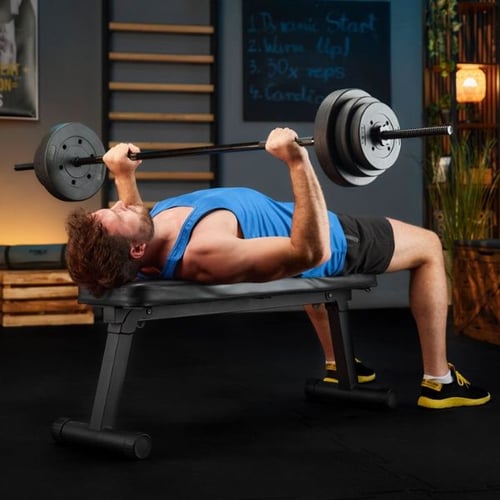
Most home training starts on standard 25 mm barbells, where the sleeves take plates with a roughly 26 mm bore and the bar stands against a wall between sessions. Thicker 50 mm sleeves belong to a separate family with its own plates, and plenty of strong training happens on both.
What Are Barbells Made Of?
Steel does the structural work in every bar worth loading, and the difference between models sits in the finish over it. A chrome-plated shaft resists rust and stays smooth under chalky hands, while a black coating over a solid steel core does a similar job with a grippier feel. Asking “what are barbells made of”, then, is a question about coating and construction, not about exotic alloys.
Sleeves are the second half of the build. On simpler bars, they sit fixed to the shaft, so the plates turn with the whole bar; on bars with bearings inside, the sleeves spin freely and the plates keep their own momentum while your wrists stay still. Collars finish the job: spring collars clip on in a second, star-lock collars thread down and hold heavier plates securely.
How Much Does a Barbell Weigh?
Numbers first: home bars start at around 6 kg and competition bars sit at 20 kg, with several steps in between. The honest answer to “how much does a barbell weigh”, then, depends on the model rather than the category name above it. Barbell weights go straight into your training log, because the load you lift is the bar plus every plate and collar on it.
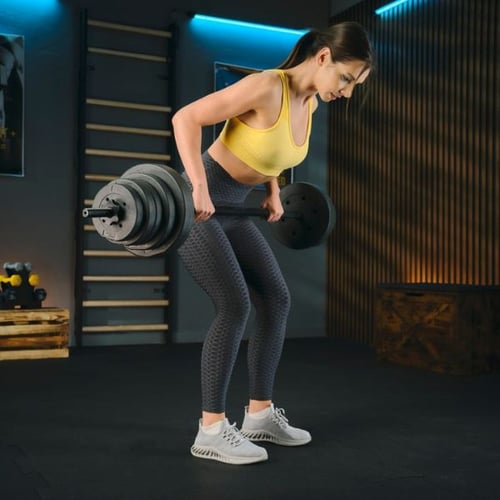
Empty-bar weights worth knowing:
- Short 25 mm bars – curls and single-arm work, light enough to leave loaded in a corner
- Straight 120 cm, 25 mm – 6 kg before a single plate goes on
- EZ curl 120 cm, 25 mm – 6.5 kg, with the same plate fit
- Short 50 cm, 50 mm – about 6.4 kg despite the thicker sleeves
- Straight and EZ curl 120 cm, 50 mm – about 10 kg each
- Hex bars – 13.2 kg for the framed model described further down
Competition bars are a different class of equipment. The men's standard is 20 kg over about 2.2 m, the women's 15 kg over roughly 2 m, and both are built to competition standards rather than for home use. Quick tip: log the total on the bar, not the plate number, because a 4 kg difference between bars will distort your training records.
How Long Are Different Types of Barbells?
Length decides where a bar can be stored before it decides anything else. A 120 cm shaft clears a doorway, fits a compact rack and stores upright in a room that has other uses. Anyone asking “how long are olympic barbells” pictures the competition figure instead, and a 20kg bar at that length is built for a gym floor with space around it.
Sleeve diameter travels with the name far more reliably than length does. An olympic bar, in everyday shop language, means 50 mm sleeves and plates with a 50 or 51 mm bore – it says nothing about the bar weighing 20 kg or measuring 2.2 m. Short 50 cm bars carry the same sleeves for single-arm work and handle very differently from their longer counterparts. Measure between your rack uprights before choosing a bar length.
Different Types of Barbells for Your Home Gym
Four shapes cover almost everything a home lifter needs, and the differences are practical rather than cosmetic. The different types of barbells split by grip shape, sleeve diameter and whether you stand behind the bar or inside it. In our range that means straight bars in both sleeve sizes, EZ curl bars in both, a short bar and one hex bar.
The four shapes and what each one is for:
- Straight bars – squats, presses, rows and deadlifts, in 120 cm or 50 cm lengths
- EZ curl bars – angled grips that take strain off the wrists during curls and extensions
- Short bars – 50 or 54 cm shafts for single-arm pressing, rowing and loaded carries
- Hex bars – a six-sided frame you stand inside, with handles at your sides
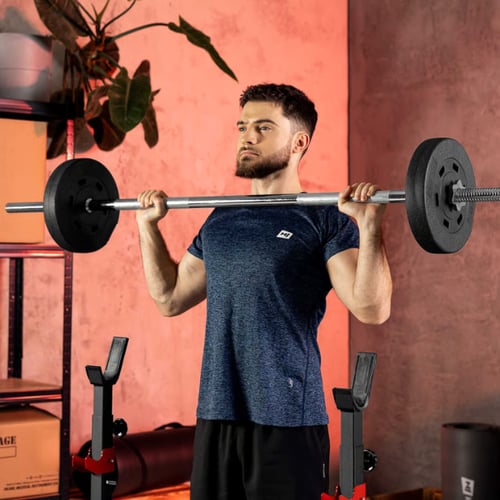
For most people, the straight bar carries the whole collection: it is the squat bar, the row bar and the bench press bar in one. We stock the Olympic Straight Barbell HS-OS120-50 for exactly that job – 10 kg empty, 120 cm long, with rotating 50 mm sleeves so the plates turn while your wrists stay still.
The hex bar sits at the other end of the family. You step into the six-sided frame, take the handles at your sides, and the load stays closer to your centre of gravity than a straight bar allows. It is made of steel, takes 25 mm plates as standard (50 mm plates need optional adapters), carries up to 250 kg and weighs 13.2 kg, with built-in stoppers; it is listed for farmer's walks, shrugs, rows and presses. Lab comparisons with a straight-bar deadlift point the same way: the frame changes how the joints share the load, so treat it as a different movement option.
How to Choose the Right Barbell Bar for Your Training
Start with the plates you own or plan to buy, because sleeve diameter is the one decision that cannot be undone later. A 25 mm plate will not lock onto a 50 mm sleeve, and a 50 mm plate rattles uselessly on a thin one. Bars with the thicker sleeves sit together in Olympic barbells with 50 mm sleeves.
The buying order runs like this:
- Sleeve diameter – match the bar to your plates, 25 mm or 50 mm
- The room – rack width, ceiling height for overhead pressing, and the wall space where the weight bar will stand between sessions
- Empty weight – a 6 kg barbell bar leaves room for small jumps in load, while a 10 kg bar gives a heavier starting point and a stiffer feel under a squat; the 50 cm model is rated to 320 kg
- Collars – spring collars come off in a second, star-lock collars hold heavier plates in place
Settle those four in that order and the choice becomes straightforward.
The Bar That Fits Your Room and Your Plates
A barbell is a simple kit with a handful of numbers attached, and those numbers (sleeve diameter, empty weight, length and stated load) decide whether it suits your training or gets in the way. Match the sleeves to your plates first, the length to your room second and the weight to your current lifts third; the shape follows from the exercises you look forward to. Whether that points you towards a 6 kg 25 mm bar, a 10 kg Olympic bar or the hex bar, our barbells and Olympic barbells cover all four shapes in one place – pick the one that matches your plates and get loading!
FAQ: Most Common Questions About Barbells
How Much Do Gym Barbells Weigh Compared with Home Bars?
Commercial gyms mostly rack 20 kg bars, so “how much do gym barbells weigh” has a tidy answer, while home bars usually run from about 6 kg to 10 kg. Check the empty weight of the bar you own and add it to every working set you write down.
Can You Use 25 mm Plates on a 50 mm Bar?
A 25 mm plate will not sit securely on a 50 mm sleeve, so the two systems stay separate unless the bar comes with adapters. Decide on the plate bore first and buy the bar that matches it.
What Are Olympic Barbells Made Of?
Olympic bars are built from steel, often with a protective or chrome finish on the shaft and sleeves that rotate on bearings. Materials differ by model, so check the technical data of the specific bar rather than assuming one shared specification.
Do You Need a Hex Bar If You Already Own a Straight Bar?
A hex bar earns its place when you want the load beside you rather than in front, which suits farmer's walks, shrugs and heavy carries. With a straight bar already at home, it works as an extra option for those movements.
Author: Hop-Sport Team