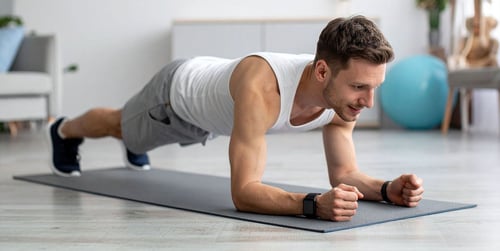
Building a strong, defined core goes beyond endless crunches and planks. Adding resistance through ab exercises with weights accelerates core development, creating deeper muscle definition and functional strength. Whether you're training at home or in a gym, weighted core training delivers superior results compared to bodyweight movements alone. Using weight plates for resistance transforms your midsection faster and more effectively. Discover how five targeted exercises build exceptional core strength!
Why Add Weight to Your Ab Training?
Bodyweight ab exercises have limits - eventually your core adapts and progress stalls. Adding resistance through weighted movements forces your abdominal muscles to work harder, stimulating new growth and strength gains. Progressive overload applies to abs just like any other muscle group.
Weighted ab training builds thicker, more visible muscle tissue. This creates the defined look most people want while developing core strength that transfers to every athletic movement and daily activity. Stronger abs improve posture, reduce back pain, and enhance performance across all exercises.
Benefits of weighted core training:
- Accelerates muscle development through progressive resistance
- Creates deeper muscle definition and visible abs
- Builds functional core strength for athletics and daily life
- Prevents training plateaus from bodyweight-only routines
- Improves posture and reduces lower back pain risk
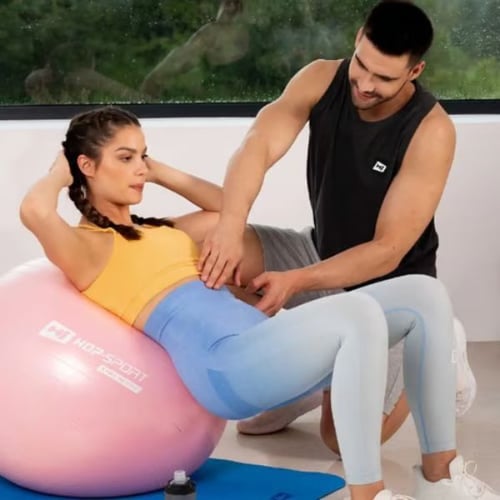
Training abs at home with weights requires minimal space and equipment. Unlike machines that isolate single movements, free weight ab exercises engage stabiliser muscles throughout your entire core, building more complete development.
Choosing the Right Weight for Ab Exercises
Start lighter than you think necessary when beginning weighted ab work. Core muscles respond better to controlled movement with moderate resistance than heavy loads with poor form. Your abs work differently than arms or legs - they stabilise and resist rotation rather than simply flexing.
Begin with 2.5-5kg for most movements, focusing on feeling your abs contract throughout each rep. As strength improves, increase weight gradually in small increments. Quality of movement always matters more than the amount of resistance used.
5 Essential Weighted Ab Exercises
These movements target your entire core from multiple angles. Each exercise challenges different areas while building strength that carries over to all physical activities.
Weighted Plank
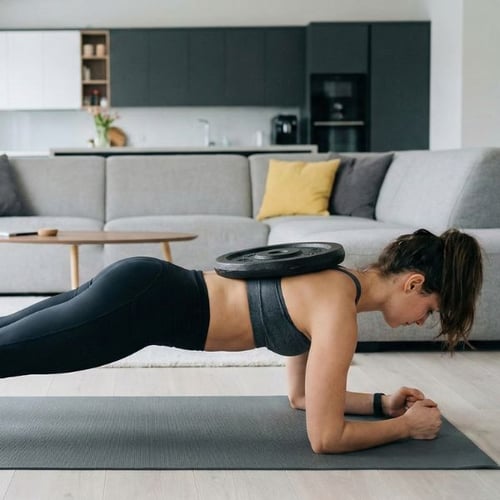
Adding weight to planks increases core engagement dramatically. This isometric hold builds endurance and stability throughout your entire midsection while supporting proper posture.
Assume a standard plank position on your forearms. Have someone place a weight plate on your upper back, or wear a weighted vest. Hold the position with proper alignment - straight line from head to heels, core braced tight. Start with 20-30 second holds and gradually increase duration.
Keys to effective weighted planks:
- Maintain neutral spine throughout - no sagging or piking
- Breathe steadily rather than holding your breath
- Engage glutes and quads to support proper position
- Start with lighter weight and focus on time under tension
- Progress slowly to heavier loads and longer holds
The weighted plank builds deep core strength that transfers directly to all pressing movements and athletic activities. It's one of the most functional ab exercises at home with weights.
Dumbbell Side Bend
Side bends target the obliques through lateral flexion. When performed correctly with proper weight, this movement carves definition along your sides while building lateral core strength.
Stand holding a dumbbell in one hand, arm hanging straight down. Bend sideways toward the weighted side, lowering the dumbbell down your leg. Return to starting position by contracting your obliques on the opposite side. Complete all reps on one side before switching.
Focus on controlled movement through a full range of motion. Avoid leaning forward or backward - movement should be purely lateral. Use moderate weight that allows 12-15 controlled reps per side.
Weighted Sit-Up
The weighted sit-up adds resistance to the classic ab exercise, building the rectus abdominis more effectively than bodyweight versions. This movement develops the "six-pack" muscles while strengthening hip flexors.
Lie on your back with knees bent, holding a weight plate or dumbbell at your chest. Curl your upper body up toward your knees, keeping the weight against your chest throughout. Lower with control and repeat.
For lower ab exercises with weights, focus on the initial curl where your lower back leaves the floor. This bottom portion of the movement engages the lower abs most intensely. Control the descent to maximise time under tension.
Weighted Russian Twist
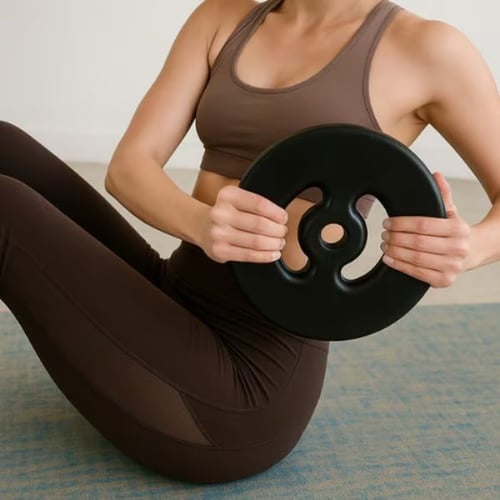
Russian twists with added resistance target your obliques and the entire rotational core. This movement builds the muscles along your sides while improving rotational power and stability.
Sit on the floor with knees bent, holding a weight plate or dumbbell at chest level. Lean back slightly to engage your core, then rotate your torso from side to side, moving the weight across your body. Keep your core tight throughout and control the rotation rather than using momentum.
This exercise works exceptionally well as one of the best ab exercises with weights for home training. The rotational pattern engages muscles that standard crunches miss entirely, creating more complete core development.
Standing Pallof Press
The Pallof press builds anti-rotation core strength - your abs work to resist twisting rather than creating movement. This functional pattern builds stability crucial for athletic performance and injury prevention.
How to perform standing ab exercises with weights effectively:
- Stand perpendicular to a cable or resistance band anchor point
- Hold the handle at chest level with both hands
- Press straight out from your chest, resisting the pull to rotate
- Hold briefly, then return to starting position with control
- Complete all reps facing one direction, then switch sides
This exercise challenges your entire core to maintain position against rotational force. At Hop-Sport, we recommend using our dumbbells with resistance bands for home training when cables aren't available. The anti-rotation stimulus builds real-world core strength that protects your spine during all movements.
Programming Weighted Ab Work
Train abs with weights 2-3 times per week, allowing recovery between sessions. Your core muscles need rest to grow stronger, just like any other muscle group. Avoid training abs intensely on consecutive days.
Structure your ab training strategically within your overall programme. Weighted core work fits well at the end of upper body sessions or as standalone workouts on rest days from heavy lifting. Avoid intense ab training right before deadlifts or squats, as core fatigue compromises performance on these movements.
Effective weighted ab workout structure:
- Choose 3-4 exercises per session
- Perform 3 sets of 10-15 reps for dynamic movements
- Hold isometric exercises like planks for 30-60 seconds
- Rest 45-60 seconds between sets
- Focus on quality contractions over speed or reps
Track your weights and reps, progressively increasing resistance as movements become easier. This systematic approach builds continuous improvement rather than spinning your wheels with the same routine indefinitely.
Transform Your Core With Smart Training
Developing exceptional core strength doesn't require a fully equipped gym. We've designed our weight sets specifically for home training that builds real results. These five weighted ab exercises target every area of your midsection through proven movement patterns that create both strength and definition. Train your core 2-3 times weekly with progressive resistance, focusing on controlled form rather than maximum weight. Quality equipment supports consistent training that delivers long-term results without the need for expensive gym memberships or complex machines!
Explore these topics:
Author: Hop-Sport Team