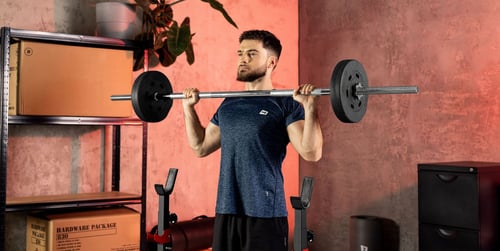
Building strength doesn’t always require an expensive gym membership or racks of fancy equipment. With just barbells and a bit of determination, you can create an effective full-body workout from the comfort of your own home. Whether your goal is to build muscle, increase endurance, or simply stay active, mastering the top 9 barbell exercises at home can make all the difference.
Why barbell exercises are effective for home workouts
Barbell training remains one of the most effective approaches for home workouts, valued for its versatility and capacity to deliver comprehensive strength development with minimal equipment. Compound barbell lifts engage multiple muscle groups simultaneously, maximising training efficiency even in confined spaces.
This method supports the principle of progressive overload, enabling gradual increases in weight to continuously challenge muscle strength and stimulate adaptation. In addition to building power, straight bar exercises enhance balance, coordination, and core stability, as free-weight movements require constant control and muscular stabilisation unlike machine-guided routines.
Training with barbells at home also provides unmatched flexibility, supporting consistency by removing the constraints of gym schedules and travel time. Ultimately, barbell workouts build functional strength relevant to everyday activities while improving posture, joint integrity, and bone density, contributing to long-term physical resilience and health.
How to structure your home barbell routine
To build an effective home barbell routine, train 3-4 times per week using full-body or upper/lower splits that centre on compound lifts such as squats, deadlifts, bench presses, and overhead presses, performed in 3-5 sets of 6-12 reps. Start each session with a 5-10 minute dynamic warm-up, apply progressive overload by increasing weights by 2.5-5 kg weekly, and allow 48-72 hours of recovery between sessions targeting the same muscle groups.
What exercises can you do with a barbell? Our top 9
Master these top 9 barbell exercises to unlock full-body strength, power, and functional fitness from home or gym. Each combines targeted muscle activation with precise technique and smart alternatives for all levels.
1. Barbell Back Squat
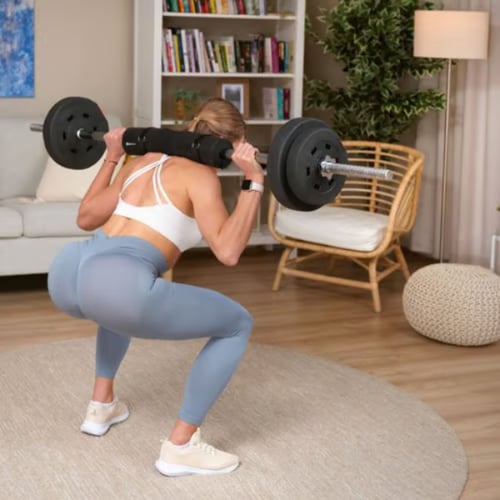
The barbell back squat stands as a cornerstone barbell leg exercise for developing explosive lower-body strength across your quadriceps, hamstrings, glutes, and core. It not only drives power and athletic performance but also triggers a strong hormonal response that supports overall muscle growth and fat loss.
To perform it correctly, position the barbell securely across your upper trapezius muscles with feet set shoulder-width apart and chest lifted high. Initiate the descent by simultaneously flexing at the hips and knees, lowering until your thighs reach parallel to the floor or slightly below if your mobility allows, then powerfully drive through your heels to return to the standing position. Throughout the movement, maintain a neutral spine and brace your core tightly to protect your lower back from strain.
For those seeking alternatives, goblet squats using dumbbells or kettlebells offer a gentler entry point with less spinal loading, while safety bar squats reduce shoulder discomfort for lifters with mobility limitations.
2. Barbell Front Squat
Front squats excel at prioritising quadriceps development while promoting an upright torso posture that strengthens the core and reduces stress on the lower back compared to back squats. This variation also enhances thoracic spine mobility and overall squat technique, making it invaluable for athletes and lifters refining their form.
Rest the barbell across the front of your shoulders in the front rack position, keeping elbows elevated high and fingertips lightly supporting the bar for stability, with feet shoulder-width apart. Lower your body by hinging at the hips and knees while maintaining that upright torso until your thighs are parallel to the ground, then push forcefully through your heels to ascend, ensuring your elbows stay up to prevent the bar from rolling forward.
3. Barbell Deadlift
The barbell deadlift serves as the ultimate full-body power builder, targeting the entire posterior chain for unmatched functional strength, improved posture, and resilience in everyday lifting tasks or sports.
Begin with the bar positioned close to your shins, feet hip-width apart, and hands gripping just outside your knees using a mixed or hook grip for security. Lift by simultaneously extending your hips and knees while keeping your back flat, chest up, and shoulders pulled back, reaching full hip extension at the top before reversing the motion under complete control to the floor. Limit to 3 sets of 5-8 heavy reps to maximise strength without excessive fatigue.
Those with hip mobility challenges can opt for sumo deadlifts with a wider stance or with an olympic steel deadlift bar, which allow a more upright torso path.
4. Barbell Bench Press
As the gold standard upper-body pressing exercise, the barbell bench press targets the pectorals, anterior deltoids, and triceps to build impressive mass, pressing power, and shoulder stability essential for sports and functional pushing movements.
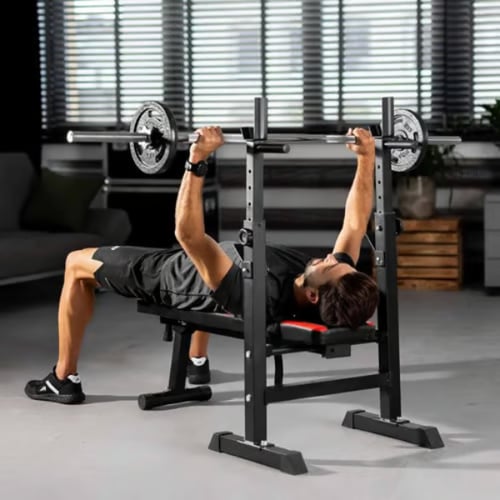
Lie back on the weight bench with feet planted firmly on the floor for stability, gripping the bar slightly wider than shoulder-width. Unrack and lower the bar in a controlled arc to touch your mid-sternum, keeping elbows at approximately a 45-degree angle from your torso, then explosively drive it back to full arm extension with shoulders retracted and core braced tight.
5. Barbell Shoulder Press
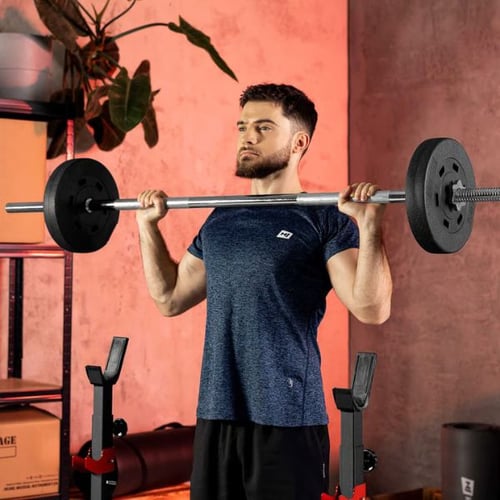
This classic barbell shoulder exercise builds robust deltoid, tricep, and upper chest strength alongside exceptional core stability, directly translating to superior performance in throwing sports, overhead work, and high metabolic conditioning sessions.
Start with the bar racked at collarbone height using a shoulder-width grip, feet stable, and core fully braced to prevent lower back arching. Press the bar straight overhead in a vertical path to full elbow lockout without hyperextension, then lower it slowly back to the starting position under complete control..
To correct imbalances, seated dumbbell presses or landmine presses offer unilateral training that challenges each side independently.
6. Barbell Bent-Over Row
The bent-over row is one of the foundational barbell back exercises, promoting muscular balance and strength across the posterior chain.
From a hip-hinged position with knees slightly flexed, back completely neutral, and overhand grip on the bar, retract your shoulder blades to pull the bar toward your lower sternum or upper abdomen. Pause briefly with lats fully contracted, then extend your arms fully to lower the bar under tension.
7. Barbell Curl
Directly isolating the biceps brachii and brachialis, barbell curls enhance elbow flexion power, forearm endurance, and aesthetic arm development while providing crucial support for heavier compound pulling exercises.
Stand tall with shoulders pulled back, holding the bar at thigh level in a supinated shoulder-width grip. Curl the bar toward your shoulders by flexing only at the elbows, keeping upper arms pinned to your sides, squeeze hard at the top, then lower eccentrically with continuous tension to avoid swinging.
8. Barbell Hip Thrust
Barbell hip thrusts deliver unmatched gluteus maximus activation to skyrocket hip extension strength, sprint speed, vertical jump power, and combat sedentary-induced hip weakness while safeguarding lower back health.
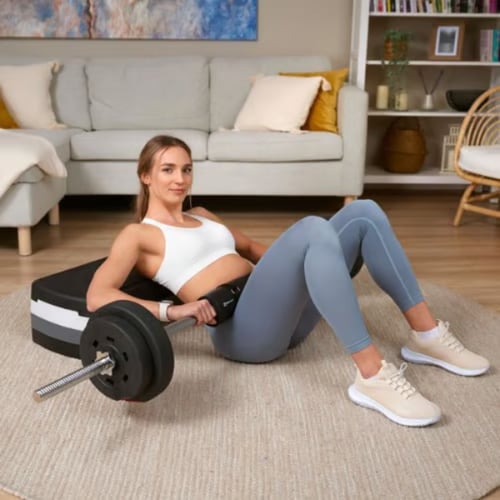
Position your upper back securely against a bench, pad the barbell over your hip crease, and plant feet flat hip-width apart. Drive explosively through your heels to thrust hips upward until your torso forms a straight line from shoulders through knees, maximally contract your glutes at the peak, then lower under control.
9. Barbell Glute Bridge
The barbell glute bridge is essentially the same as the hip thrust but performed on the floor without elevation, offering a shorter range of motion for focused glute and hamstring activation, core stability, and posterior chain resilience.
What are the best barbell exercises?
The best barbell exercises emphasise compound movements that deliver full-body strength, power, and functional gains: back and front squats for lower-body dominance, deadlifts for posterior chain development, bench and shoulder presses for upper-body pushing, bent-over rows for back balance, curls for arm isolation, and hip thrusts/glute bridges for glute activation.
Regularly incorporating these nine into your routine builds comprehensive physical resilience for athletics and everyday demands, with progressive overload across 3-5 sets of 6-12 reps ensuring optimal progress and injury prevention.
Explore these topics:
Author: Hop-Sport Team