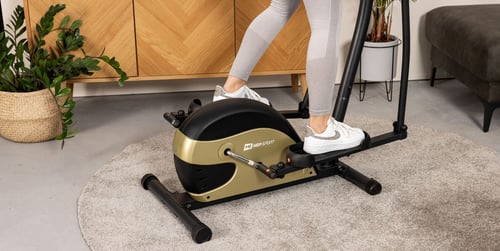
Understanding which muscles get activated during cross trainer workouts helps train smarter and set realistic expectations. Unlike many cardio machines that focus primarily on legs, the cross trainer engages the entire body when used correctly. Whether you're new to elliptical cross trainers or looking to optimize your current routine, let's break down exactly which muscles work during each session and how to maximize the benefits.
Muscles Worked on a Cross Trainer
The cross trainer muscles worked include both lower and upper body muscle groups, making it a true full-body exercise tool. Quadriceps and hamstrings drive the pedalling motion, while glutes activate during the push phase. The elliptical machine muscles worked also include calves, which stabilize ankles throughout the movement.
Upper body engagement comes from the moving handles. Biceps and triceps work during pushing and pulling, while shoulders and chest contribute to arm movements. Back muscles, including the lats and rhomboids, engage during the pulling motion. Core muscles stabilize the torso throughout the entire movement, working constantly to maintain balance and posture.
Primary muscle groups activated:
- Quadriceps and hamstrings for leg power
- Glutes for hip extension and power generation
- Calves for ankle stability and push-off
- Biceps, triceps, and shoulders for arm movements
- Core muscles for stability and balance
- Back muscles including lats and rhomboids
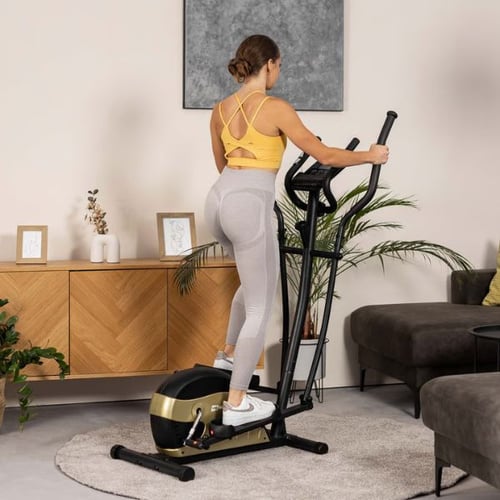
The simultaneous engagement of so many muscle groups makes the cross trainer exceptionally efficient for burning calories and building muscular endurance. While it won't build significant muscle mass like resistance training, it develops cardiovascular fitness while toning and strengthening your entire body.
How to Target Specific Muscle Groups
You can emphasize different muscles used on cross trainer workouts by adjusting your technique and body position. Leaning forward slightly shifts more work to your quads and upper body, engaging your chest and shoulders more actively. Standing more upright emphasizes your glutes and hamstrings, making them work harder during each stride. Increasing resistance forces all muscle groups to contract more intensely, building strength endurance over time.
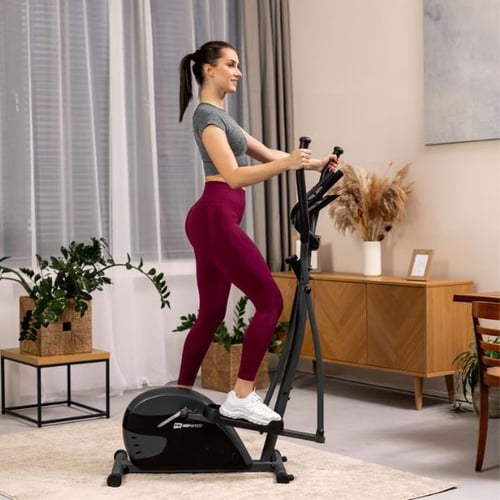
Pedalling backward changes the emphasis dramatically. Reverse motion targets hamstrings and glutes more intensely than forward pedalling, creating balanced leg development. This variation also engages hip flexors differently, providing comprehensive lower body conditioning.
For leg-focused work, minimize arm movement by holding the stationary handles and let the lower body drive the motion. For maximum upper body work, actively push and pull the moving handles with force, treating each stroke like a standing row or chest press.
Interval training adds another dimension to your muscle engagement. Alternating between high-resistance sprints and lower-resistance recovery periods challenges your muscles in different ways. High-resistance intervals build strength endurance, while faster-paced sections improve cardiovascular capacity. This combination creates a more complete training stimulus than steady-state cardio alone.
Benefits of Using a Cross Trainer Regularly
Regular cross trainer use delivers benefits that extend beyond simple cardio fitness. The low-impact nature protects joints while still providing an effective workout, making it ideal for people recovering from injuries or those with joint concerns. This makes crosstrainer muscles work hard without the stress that running or jumping creates on knees and ankles.
Consistent training improves cardiovascular endurance, helping the heart pump blood more efficiently throughout the body. Resting heart rate decreases over time as the cardiovascular system becomes stronger. Muscles develop better endurance, allowing sustained activity for longer periods without fatigue. The full-body engagement means higher calorie burn per session compared to leg-only cardio machines, supporting weight management and fat loss goals when combined with proper nutrition.
Key benefits of regular training:
- Low-impact cardio that protects joints
- Improved cardiovascular endurance and heart health
- Enhanced muscular endurance throughout the body
- Higher calorie burn from full-body engagement
- Better balance and coordination
- Convenient home or gym training option
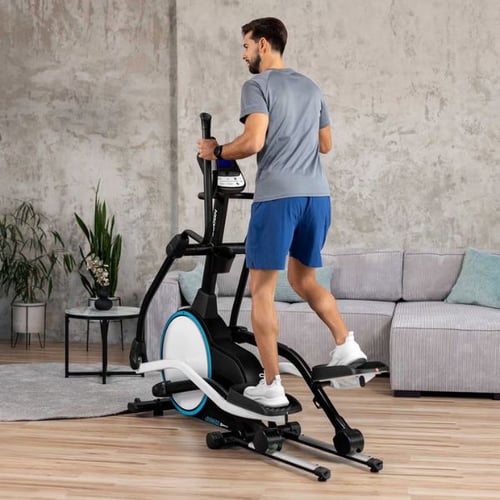
Mental health benefits accompany the physical improvements. Regular cardio exercise reduces stress hormones like the cortisol, while increasing endorphins that improve mood and create a sense of well-being. The rhythmic nature of cross trainer movement can be meditative, giving the mind a break while the body works. Better sleep quality often follows consistent exercise routines, creating a positive cycle of improved rest and better training performance.
Tips for Maximising Muscle Activation
Proper form ensures you get maximum benefit from every session. Stand tall with your core engaged throughout the movement, maintaining good posture from start to finish. Avoid leaning too heavily on the handles - let your legs do most of the work while your arms assist with the pushing and pulling motion. Keep your feet flat on the pedals to engage your entire lower leg, from calves through quads.
Vary your resistance and speed to challenge different energy systems and muscle fibers throughout the workout. High resistance with slower movement builds strength endurance in your muscles, similar to lifting weights at a controlled tempo. Lower resistance with faster movement improves your cardiovascular capacity and burns calories efficiently. Intervals combining both approaches deliver the best overall results, training your body to handle different intensities and improving both strength and endurance simultaneously.
Push and pull the handles with intention, rather than just moving your arms passively along for the ride. This active engagement recruits more upper body muscle fibers and increases your calorie burn significantly. Focus on using your back muscles during the pull phase and your chest during the push phase, treating each stroke like a strength exercise. Think about squeezing your shoulder blades together on the pull and pressing your chest forward on the push.
Frequently Asked Questions
Is a cross trainer good for building muscle?
Cross trainers build muscular endurance rather than significant muscle mass. They tone and strengthen existing muscles while improving cardiovascular fitness. For muscle growth, combine cross trainer cardio with dedicated strength training using weights.
Does a cross trainer tone your stomach?
Yes, cross trainers engage your core muscles throughout the movement to maintain stability and balance. While they won't give you six-pack abs alone, they do contribute to core strength and can help reduce body fat when combined with proper nutrition, making your abs more visible.
How long should you use a cross trainer to see results?
Most people notice improvements in cardiovascular fitness within 2-3 weeks of consistent training. Visible changes in body composition typically appear after 6-8 weeks. We suggest training 3-5 times per week for 20-30 minutes per session to see meaningful results while allowing adequate recovery.
Explore this topic: Is a Cross Trainer Good for Weight Loss? Expert Tips
Author: Hop-Sport Team