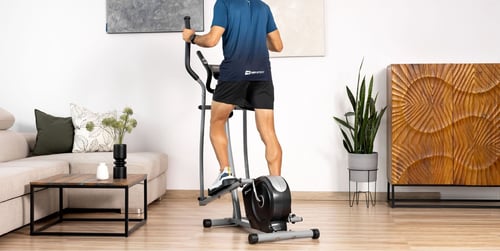
Losing weight is a common fitness goal, and many people turn to home gym equipment to help them reach it. Elliptical cross trainers stand out as a top choice for those looking to burn calories efficiently while being gentle on their joints. Thanks to its smooth, low-impact motion and ability to engage both the upper and lower body, it’s no surprise that fitness experts often recommend it for weight loss. Find out why this machine is so effective and how to get the most from every workout for real, lasting results.
How does a cross trainer work?
A cross trainer, often called an elliptical machine, works by using a mechanical system of foot pedals, handlebars, and a flywheel to create a smooth, continuous elliptical motion that mimics walking, running, or stair climbing.
The unique elliptical motion
The defining feature of the cross trainer is the oval or elliptical path of its foot pedals. This is not a simple circular motion like cycling, nor a linear pounding like running on a treadmill. Instead, it combines elements of walking, stair climbing, and cross-country skiing.
- Mimicking natural movement: The smooth, elongated arc of the pedal motion closely replicates the natural ankle, knee, and hip movements during walking or running. This ensures a biomechanically sound movement.
- Low-impact advantage: Critically, your feet never leave the pedals. This eliminates the ground reaction force, the repeated impact stress that occurs when your foot hits the ground during running or jogging. By removing this impact, the machine significantly decreases pressure on the knees, hips, ankles, and back, making it an ideal choice for rehabilitation, the elderly, or individuals with joint concerns.
- Propulsion system: The user generates motion by pushing down and back on the pedals and simultaneously pushing and pulling the arm handlebars. This movement rotates a flywheel or crank system, which is where the resistance is applied, allowing you to control the intensity of your workout.
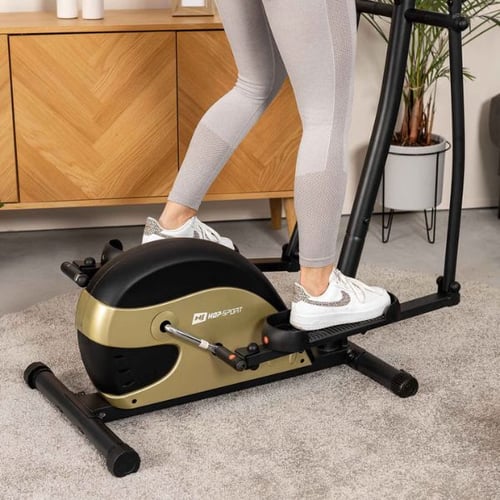
The core mechanical ingenuity is the way the four-bar linkage constrains the foot to a fixed elliptical path, delivering the cardiovascular benefits of running without the associated joint trauma.
What does the elliptical target?
Many people are asking, “What is the elliptical good for?”. Unlike machines that focus only on the lower body, the cross trainer stands out with its dual-action design, engaging both the upper and lower body for a highly efficient, full-body workout.
The machine’s structure allows you to work multiple major muscle groups at once. As you push and pull the pedals, the large muscles of your legs are activated, supporting strength and calorie burn. At the same time, the moving handlebars ensure your arms and torso are actively involved in the movement.
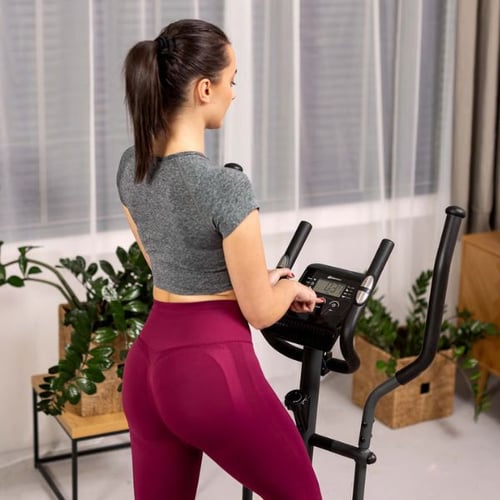
During a typical session, the following muscles are engaged:
- glutes and hamstrings - activated as you push the pedal back and extend your hip
- quadriceps - engaged as you press the pedal down and extend your knee
- calves - work to stabilise your foot throughout the movement
- biceps - used when you pull the handles back towards your body
- triceps, chest, and shoulders - activated when you push the handles forward
Your abdominal and back muscles are also constantly engaged as stabilisers, helping you maintain upright posture and balance throughout the movement, especially as you increase speed or resistance.
Top cross trainer benefits for weight loss
The pursuit of sustainable weight loss requires finding exercise that is both effective and enjoyable enough to stick with. If your primary fitness goal is to shed kilos, understanding the benefits of the elliptical for weight loss is essential. This machine is a powerhouse for achieving a calorie deficit, the fundamental requirement for successful weight management.
Maximum calorie burn with full-body engagement
The number one reason the cross trainer is so effective for weight loss is its ability to burn a high number of calories in a single session. This is directly linked to its full-body, dual-action design.
- Recruiting more muscle: Unlike cycling or walking, the magnetic elliptical trainer requires simultaneous effort from your entire body. By engaging larger muscle groups like the glutes, quadriceps, hamstrings, and the upper body, the machine demands more energy.
- Creating a calorie deficit: The greater the muscle mass you engage, the higher your heart rate and metabolic demand, translating directly into a faster rate of calorie consumption. Consistently burning more calories than you consume is the key to achieving and maintaining weight loss.
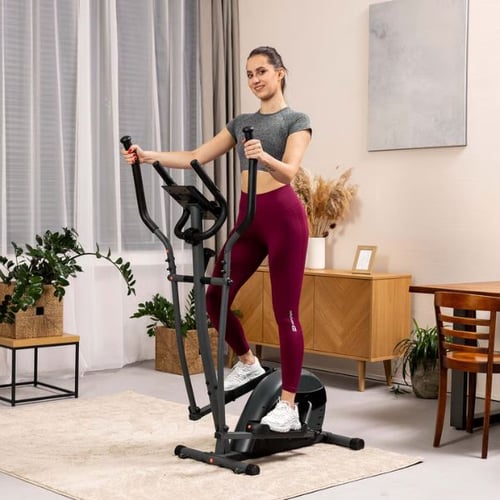
This comprehensive muscle activation ensures that your time spent on the machine is maximally productive for your weight loss goals.
Does the elliptical burn fat?
The ability to easily adjust the intensity on an elliptical machine allows you to optimise your sessions specifically for fat burning.
- Heart rate management: The resistance and speed settings allow you to maintain your heart rate in the fat-burning zone for prolonged periods. This is an efficient way to ensure your body is primarily using stored fat for fuel.
- High-intensity interval training (HIIT): The cross trainer is ideal for HIIT workouts. Alternating short bursts of maximum effort with periods of low-intensity recovery is proven to be highly effective for boosting post-exercise metabolism, known as the after burn effect (EPOC). This means you continue to burn calories even after your workout has finished, accelerating your fat loss.
- Targeted muscle work: By increasing the resistance or the machine's incline (if available), you can place greater demand on large, calorie-hungry muscles like the glutes and hamstrings. This targeted approach maximises the overall effort and helps to sculpt and tone the lower body while you burn fat.
In summary, when asking if the cross trainer is good for weight loss, the answer is unequivocal. The machine provides the perfect trifecta: maximum calorie burn through full-body movement, the sustainability of low-impact training, and the flexibility to adjust intensity for peak fat burning. These elliptical machine benefits make it an essential tool for anyone looking to achieve a leaner, fitter physique safely and effectively.
Maximising calorie burn with the elliptical: Expert workout tips
Knowing that a cross trainer is effective is only half the battle. The other half is knowing how to use it effectively. If your goal is to see if the elliptical burns fat quickly, implement these expert strategies:
Incorporate interval training
Steady-state cardio is good, but HIIT training is better for accelerating fat loss. An effective routine involves alternating between periods of high-intensity effort and low-intensity recovery.
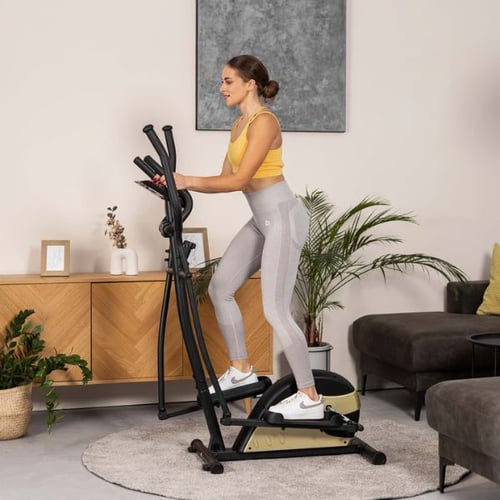
Here is an example of an effective interval workout structure:
- Warm-up: 5 minutes at a low resistance and steady pace.
- High-intensity interval: 60 seconds at a high resistance and fast pace.
- Low-intensity interval: 90 seconds at a lower resistance and recovery pace.
- Repeat: 8-10 cycles of the high and low-intensity intervals.
- Cool-down: 5 minutes at a very low resistance and slow pace.
This technique keeps your heart rate elevated and maximises the post-exercise calorie burn, known as the after burn effect.
Please note the resistance and incline
Relying solely on speed will only train speed, not strength or intense calorie burn. To increase the workload and engage more muscle fibres, you must increase the resistance.
Likewise, if your elliptical machine offers an incline feature, use it. Raising the incline mimics climbing a hill, which significantly activates the glutes and hamstrings, leading to a much higher caloric expenditure.
Focus on consistent full-body engagement
The key to the maximum calorie burn is to use the moving handlebars actively. It's easy to just hold on lightly and let your legs do all the work, but this dramatically reduces the effectiveness of the exercise. Push and pull the handlebars with purpose to ensure your arms, chest, and back are contributing fully to the workout.
TIP: Vary your movement by occasionally pedalling backwards. This activates the hamstrings and glutes in a slightly different way, helping to avoid plateauing and ensuring a more well-rounded muscular cross trainer workout.
FAQ - Your elliptical training questions answered
There are plenty of questions swirling around elliptical workouts. With so much curiosity, we decided to gather the most common queries and provide clear, practical answers to help you make the most of your time on the cross trainer.
How long on the elliptical for 10,000 steps?
On average, it takes around 40 minutes to hit 10,000 steps on the elliptical. But factors like speed and stride length can affect this time.
Is 30 minutes of elliptical a day enough?
The amount of time you should spend on the elliptical depends on your goals.
In general, you should aim for a minimum of 150 to 300 minutes of moderate intensity aerobic exercise weekly, or 75 minutes of high intensity exercise.
This translates to at least 30 minutes of moderate intensity exercise 5 days a week. If you don’t have 30 minutes to spare, up the intensity and do 20 minutes instead.
Can I train for a 5K on an elliptical?
Using an elliptical to train for a 5K race can help build your cardiovascular fitness. But it won’t effectively train all the muscles used during running, so it’s best to use a combination of running and elliptical training when preparing for a 5K.
Does the cross trainer help build muscle?
The elliptical is primarily a cardiovascular machine and is highly effective for burning calories and fat. While its resistance-based, full-body motion does tone and strengthen the engaged muscles) it is not the best tool for significant muscle hypertrophy (building large muscle mass). For serious muscle growth, you should complement your elliptical workouts with specific strength training exercises using weights.
Author: Hop-Sport Team