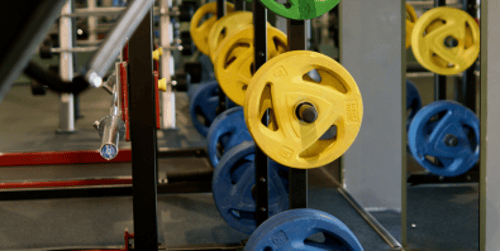
Weights and bars left on the floor quickly take over a home training space, and clutter builds up faster than most people expect. Clutter costs more than a messy look: the training area shrinks, equipment gets harder to reach, and sooner or later the session gets skipped altogether. Good gym storage ideas start with one simple question – which equipment do you use every day, and which only occasionally? Weight, floor space and reach settle the rest. Work through the plan below and take the floor back!
What matters before anything gets moved:
- Weight first – the heaviest kit belongs low, on something stable
- Clear routes – nothing stored where you walk, step back or set a bar down
- Weekly use – daily gear within reach, seasonal gear further out
- Total capacity – a stated maximum load covers the whole rack, never each peg
- Small stuff – bands, collars and straps stay tidy once they each have one fixed spot
How to Plan Practical Gym Equipment Storage
Planning starts with measuring the room and checking which equipment you actually use over a week. Split the kit into three groups as you go: daily, weekly and occasional. Daily gear stays within a step of where the training happens, weekly gear can sit along a wall, and occasional gear goes behind a door or into a corner. The best home gym storage ideas are that split made physical because a room organised by frequency needs far less tidying than a room organised by looks.
Four things to settle before anything gets a permanent home:
- Floor area – measure the training zone and the walkways separately, then keep them apart
- Equipment weight – heavy equipment should be stored low, on a stable base, never up high
- Frequency of use – daily gear at arm's reach, seasonal kit further back
- Access routes – the path to the door and the space around the bar stay empty
Metal makes up most of the weight in a home gym, so plates and bars get a home first and everything else fits around them. The two weight racks we stock do exactly that job: they lift the iron off the floor and keep it sorted by size rather than by whoever put it down last. Once that is settled, the rest of the gym equipment storage ideas follow the same rule – heavy and frequent goes low and close, light and rare goes high and far away.
Weights Storage Ideas for a Safer Workout Area
A 20 kg plate left in a walkway is an accident waiting to happen, and that risk is exactly what weights storage exists to remove. Plates, dumbbells and bars are the three things in a home gym that really hurt when they end up in the wrong place, and they all need the same thing: a low, stable spot near the lifting area.
UK safety guidance on any kind of sports equipment storage keeps returning to two points – keep the route through the room clear, and put the heaviest items at the bottom. That principle applies just as much to dumbbell storage. A pair of 20 kg dumbbells left on the floor takes up more usable space than a rack holding four times that weight, because the area around them stops being usable for training. Lifting them onto a stand frees up close to a square metre of training area.
Six habits that keep the lifting area safe:
- Heaviest low – big plates at the bottom of the rack, small plates above them
- Bars flat – a loose bar propped in a corner will eventually fall
- Collars together – one tray or box, always in the same spot
- Walkways empty – the route in and out never doubles as shelf space
- Light up high – bands, straps and grips take the upper positions
- Reset every session – two minutes now beats a full clear-out on Sunday
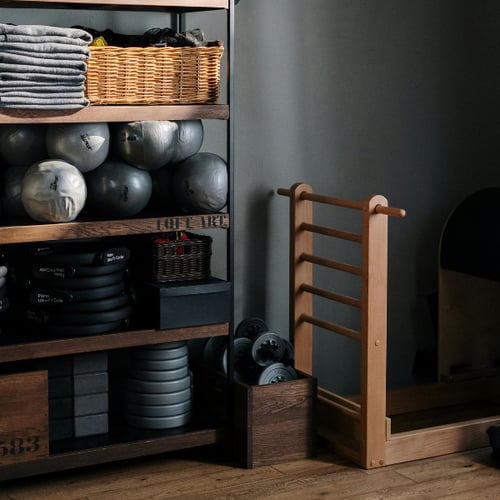
Those habits only hold if whatever you put the weight on can take it, which is where the numbers start to matter.
How Much Weight Should a Rack Hold?
Add up everything that will sit on it, then compare that total with the maximum load the manufacturer states – and read that figure as the whole unit, not each peg. A home collection of 60 to 100 kg of plates plus a bar clears most stands comfortably, while a growing set of Olympic plates needs genuine headroom. The Weight plate, dumbbell and barbell rack HS-1008A is rated up to 300 kg in total and takes plates, three bars and two dumbbells with grips of at least 12 cm inside a 46 by 84 cm footprint.
Sensible weight storage leaves a margin because collections grow faster than anyone plans for. We give one total for the full rack rather than a figure per peg, so the sum done at home is the sum that counts. It also pays to stand the rack on a level floor with all four feet in contact, since a frame that rocks under load usually points to an uneven floor, not a fault in the rack.
How to Choose Gym Storage Racks and Weight Racks
Start with what you own, not with what you plan to buy: count the plates, note which bars are in the house, and measure the corner where the rack will stand. That groundwork is what choosing a gym storage rack really means, because storage units for sports equipment come in every shape imaginable, but the ones that work for weights share three features – a low centre of gravity, a stated maximum load and a footprint you can genuinely spare. Peg and holder sizes differ between bars, so check the bar against the holder before buying rather than after.
For a smaller collection, the Weight Plate Rack HS-1005A takes up to 200 kg across four plate pegs and one barbell holder, in a frame 55 by 59 cm and 68 cm tall. Plastic caps on the feet sit between the steel and the floor, and we put the spanners for assembly (sizes 13 and 17) straight in the box, so you can complete the assembly right away. Good gym storage is decided by the heaviest equipment you own, not by the amount of free wall space.
How to Store a Yoga Mat and Other Gym Accessories
Roll the mat, hold it with a strap or a spare band, and stand it in a corner where it cannot unroll across the walkway. Most yoga mat storage solutions come down to that single habit, kept up for two weeks until it becomes automatic. A gym shelf handles the lighter end of a collection nicely, since bands, grips and skipping ropes weigh almost nothing and mainly need to stop tangling with each other. A mat kept strapped and upright takes up almost no floor space.
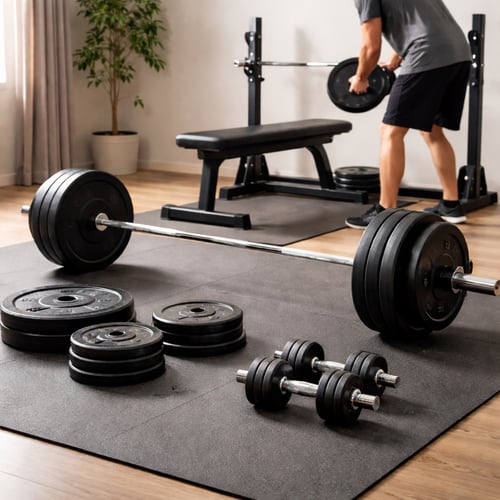
A basket, a box or a small gym accessories storage rack all have their uses:
- A basket – resistance bands, grips and skipping ropes gathered in one spot
- A hook or rail – long straps hang straight instead of getting tangled
- A lidded box – collars, chalk and spare bolts stay in one place instead of getting scattered around the room
A weight storage box is one of the most useful elements of a tidy gym: anything that rolls, clips or disappears belongs in one closed container rather than in four different corners. Gym shelving works on the same principle for light equipment, as long as nothing heavy ends up above head height. Give every group one home and the weekly reset takes two minutes instead of twenty.
Keeping the Kit Tidy Keeps the Training Going
Storage is never the exciting part of a home gym, yet it quietly decides how often the exciting part happens. Measure the room, store the heavy items low and stable, keep the route in and out clear, and let the small accessories share a box or a shelf between them. No rack will do the training for you, but keeping weights off the floor removes the most common risk in a home gym. Two minutes at the end of a session keeps the room ready for the next one, which is the whole point of sorting it out in the first place. Match one of our racks to the weight you already own and take your floor back for training!
FAQ: Most Common Questions About Home Gym Storage
Does a Weight Rack Need to Stand Against a Wall?
A wall is useful for keeping the rack out of the walkway rather than for holding it upright. What matters far more is a level surface, so the frame rests on all four feet without rocking when the plates go on.
How Often Should Storage Be Checked Over?
A quick look every few weeks is enough: check that bolts are still tight, feet are still flat and nothing has developed a wobble. Racks carry less strain than the bars they hold, but they are still steel under load.
What Else Fits on a Rack Besides Plates?
Bars and dumbbells fit too, provided the holders suit them – dumbbell space in particular depends on the grip length of the model. Small items such as collars, clips and chalk still need a box, because they will not sit safely on a peg.
Is It Worth Storing Weights in a Different Room?
Keeping the weights where the training happens usually keeps the training happening at all, since a trip down the hall is one more reason to skip a session. If space forces the split, carry one plate at a time and keep both routes completely clear.
Author: Hop-Sport Team