Picking the best barbell matters more than most people think. A bar built for the wrong plate size turns every session into a frustration - and there are more options out there than "just grab any bar". The barbells available today split into two clear camps: standard 25 mm bars and Olympic 50 mm bars. This guide covers both, compares them directly, and helps you find the best barbell for your setup. Let's get into it!
What you'll learn:
- Standard 25 mm bars: three options covering curls, home presses, and adjustable dumbbell setups
- Olympic 50 mm bars: four bars from a compact curl bar to a deadlift-specific design
- Standard vs Olympic: a direct comparison so you don't second-guess the choice
- How to choose: four questions that cut through the confusion fast
Standard Barbells: The 25 mm Range
Standard bars use a 25 mm sleeve - the size that fits composite and standard weight plates. Lighter and shorter than Olympic bars, they suit home setups where space is tighter and loads are moderate.
Straight Bar 120 cm 25 mm Chrome Steel
At 120 cm, this chrome-plated straight bar fits bench work, rows, and curls without the floor space demand of a full-length bar. The Straight Bar 120 cm 25 mm Chrome Steel has a 25 mm sleeve that takes standard composite plates. Chrome finish stays clean. A practical starting point for any first home gym.
EZ Curl Bar 120 cm 25 mm Chrome Steel
Angled grip sections reduce wrist strain during curls and skull crushers. The EZ Curl Bar 120 cm 25 mm Chrome Steel takes the same 25 mm plates as the straight bar - no extra plate set needed. Quick tip: for solo heavy tricep overhead extensions, the angled EZ grip is safer than a straight bar when the lockout gets demanding.
Short Bar 54 cm 25 mm Black Plastic-Coated
At 54 cm, this bar works as a loadable dumbbell when fitted with standard plates. The Short Bar 54 cm 25 mm Black Plastic-Coated adds single-arm training options without the cost of fixed-weight pairs. The plastic coating protects floors - practical for training in a living room or bedroom.
Standard 25 mm bars suit these goals best:
- First home gym: affordable, versatile, works with composite plate sets
- Arm and upper body focus: straight and EZ curl bars cover curls, rows, and pressing
- Tight budget: lower bar cost plus cheaper composite plates keeps total spend down
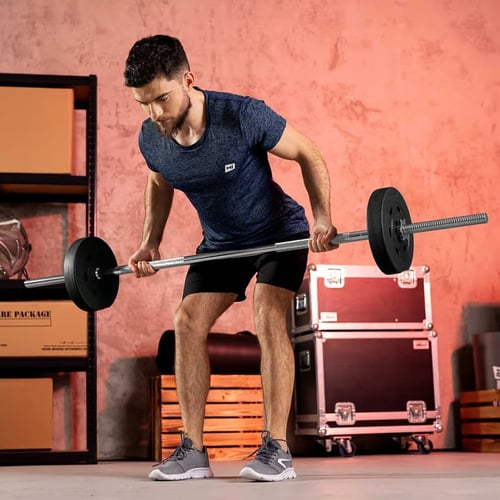
All three pair with composite plates - ready to use as a barbell for home gym training from day one.
Olympic Barbells: The 50 mm Range
Olympic barbells use a 50 mm sleeve and handle heavier loads than standard bars. The wider sleeve allows rotating collars - plates spin independently under load. The olympic barbells range covers everything from a compact curl bar to a dedicated deadlift bar.
Olympic bars are the better match when:
- You already own Olympic plates: 50 mm sleeves are the only compatible option
- You train heavy: deadlifts, squats, and cleans need higher load capacity and rotating sleeves
- You want a dedicated deadlift bar: the specialist design outperforms a general-purpose bar for max pulls
Olympic EZ Curl Bar 120 cm 50 mm with Rotating Sleeves
With 50 mm rotating sleeves and angled grip sections, this bar reduces wrist torque during heavy curls and skull crushers. The Olympic EZ Curl Bar 120 cm 50 mm with Rotating Sleeves suits bicep curls, reverse curls, and lying tricep extensions. Plates load directly onto the 50 mm sleeve - no separate standard plate set needed. A solid upgrade once arm training loads get serious.
Olympic Straight Barbell 50 cm 50 mm with Rotating Sleeve
At 50 cm, this specialist loading bar is built for landmine attachments, T-bar rows, and single-arm pressing rather than full barbell training. The Olympic Straight Barbell 50 cm 50 mm with Rotating Sleeve has a 50 mm sleeve with a rotating collar, compatible with the same Olympic plates as the rest of this range.
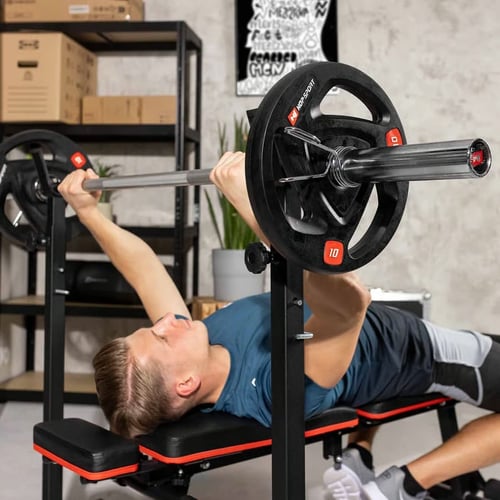
Where shoulder mobility limits overhead pressing, a landmine press with this bar offers a more forgiving movement angle. Best used as a targeted addition alongside a full-length Olympic bar, not as a standalone setup.
Olympic Straight Barbell 120 cm 50 mm
A full Olympic setup without the 220 cm clearance demand - bench press, overhead press, and rows all work with this length in spaces that rule out a full-length bar. The Olympic Straight Barbell 120 cm 50 mm takes the full range of 50 mm Olympic plates with no compromise on load capacity.
Intermediate lifters moving up from standard plates get proper Olympic plate compatibility without committing to a power rack or full bar storage. The middle option between the specialist 50 cm loading bar and a competition-length setup.
Olympic Steel Deadlift Bar
Built for heavy pulling, the Olympic Steel Deadlift Bar has extra shaft flex - the whip that lets plates leave the floor before the centre, reducing peak demand at the start of a max pull. Aggressive knurling holds grip under serious loads. Best suited to experienced lifters, not a versatile everyday bar.
All four accept the same 50 mm plates.
Standard vs Olympic: Which One Suits You?
Standard 25 mm bars cost less and pair with composite plates. Olympic 50 mm bars handle heavier loads with rotating sleeves for serious strength training.
Feature | Standard (25 mm) | Olympic (50 mm) |
Sleeve diameter | 25 mm - composite and standard plates | 50 mm - Olympic plates only |
Rotating sleeves | No - fixed sleeves | Yes - spin under load |
Max load | Moderate - suited to home use | High - built for heavier lifting |
Best for | Beginners, curls, home gym basics | Strength training, deadlifts, power movements |
New to home training, start with the 25 mm straight bar and composite plates - covers every basic barbell movement at lower cost. Clear upgrade signals: composite plates maxed out, loads feeling unstable, or moving into squats and cleans. Match the bar to the plates you own from the start - the sleeve diameters are not compatible across types.
Key Features to Understand Before Buying
Two specs matter most. Sleeve diameter decides plate compatibility - 25 mm and 50 mm are not interchangeable. Bar length affects setup: 120 cm fits smaller rooms, while a full-length bar needs power rack clearance and dedicated floor space.
Rotating sleeves let plates spin independently from the shaft, reducing wrist torque. Fixed sleeves handle standard home training loads fine - rotating sleeves make a noticeable difference once loads get heavy.
How to Choose the Right Barbell for Home Gym Training?
The proper barbell for home gym training comes down to four factors: plate compatibility, load range, movement type, and available space.
Work through these before buying:
- What plates do you own? - match sleeve diameter first; 25 mm for composite plates, 50 mm for Olympic plates
- What loads do you lift? - moderate home training suits standard; heavier squatting and deadlifting needs Olympic
- Which movements do you do most? - curls and bench presses work with a 25 mm straight or EZ bar; heavy pulls and cleans need an Olympic bar with rotating sleeves
- How much space is available? - 120 cm fits tighter setups; full-length bars need rack clearance and dedicated floor area
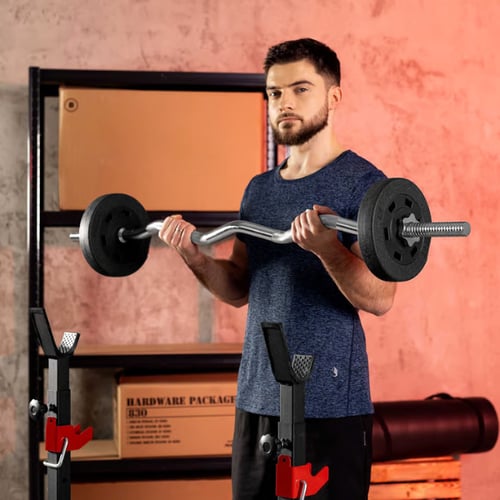
For most people starting out, the 120 cm 25 mm straight bar is the best barbell for beginners - it covers every basic movement without overspending.
Choosing the Right Barbell
The best barbell for your setup matches your plate type, fits your space, and suits your lifts. At Hop-Sport, we carry both standard and Olympic options - discover the barbell that will transform your training. Browse our full collection now and save time searching.
FAQ: Most Common Questions About Barbells
What is the difference between a standard and an Olympic barbell?
Standard barbells use a 25 mm sleeve for composite plates; Olympic barbells use a 50 mm sleeve with rotating collars. That spinning action is important for heavy deadlifts and cleans, where torque control reduces joint strain.
What is the best barbell for beginners?
A straight 120 cm bar with a 25 mm sleeve is the most practical starting point for home lifting - lighter, shorter, and paired with affordable composite plates. It covers curls, rows, and light bench press without the cost of an Olympic setup.
Do I need a rack to use a barbell at home?
Curls, rows, Romanian deadlifts, and floor presses all work without a rack. Barbell squats and bench press require a power rack, squat stands with safety spotters, or a training partner to hand off safely.
What is the best budget barbell for a home gym?
The straight 120 cm 25 mm chrome steel bar is the best budget barbell starting point - handles all core movements at a practical price, without the higher cost of Olympic bars and rubber-coated plates.
Are home gym barbells compatible with all weight plates?
Standard 25 mm bars are only compatible with composite and standard plates; 50 mm Olympic bars require Olympic plates. The sleeve diameters are not interchangeable - confirm sleeve size before buying.
Author: Hop-Sport Redaktion